
India Faces 37.5% Concentrate Feed Deficit as Livestock Productivity Push Raises Demand, Availability of Dry Fodder in Line with Demand
India’s livestock sector is growing rapidly, but a major shortage of concentrate feed could constrain future productivity. However, alongside increasing the supply of green fodder, the shortage of concentrate feed must also be addressed. An ICAR assessment estimates a 37.5% concentrate deficit under practical feeding conditions, alongside smaller gaps in green and dry fodder. It calls for better feed efficiency, alternative resources, improved crop residues and region-specific feeding strategies.

 Join the RuralVoice whatsapp group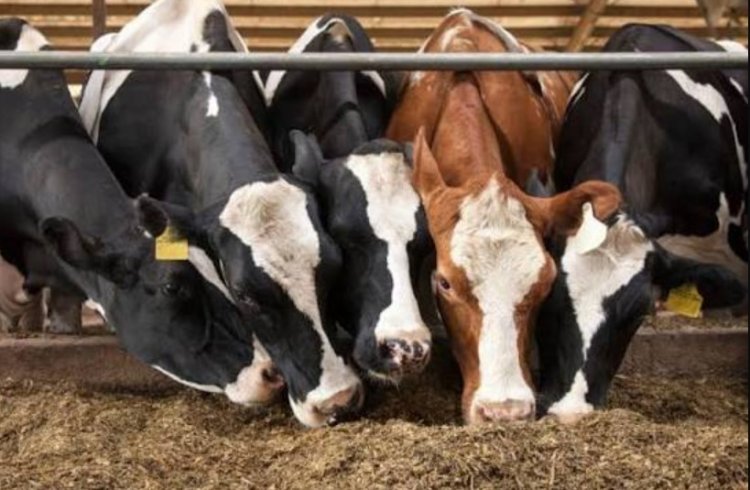
India’s rapidly expanding livestock economy is facing a significant challenge on the feed front, with concentrate feed emerging as the largest deficit component of the country’s livestock feed basket, according to a new assessment by the Indian Council of Agricultural Research (ICAR). As far as dry fodder is concerned, we are capable of meeting the demand. However, alongside increasing the supply of green fodder, the shortage of concentrate feed must also be addressed.
The report, Comprehensive Assessment of Feed and Fodder Resources for Increased Livestock Production in India, estimates that under a practical feeding scenario, India faces a 37.5% deficit in concentrate feed, while the shortages of green and dry fodder are estimated at 14.1% and 2.4%, respectively.
The assessment distinguishes between theoretical feeding requirements based on recommended nutritional standards and the way livestock are actually fed under resource constraints. Since farmers generally prioritise quality feed for productive animals, particularly milch cattle and buffaloes, the practical scenario provides a more realistic picture of the feed situation.
Concentrate feed the biggest challenge
The ICAR assessment estimates that if all livestock were fed according to standard nutritional recommendations, the annual requirement would be about 254.86 million tonnes of concentrate, 931.12 million tonnes of green fodder and 488.55 million tonnes of dry fodder.
However, such feeding standards are often neither economically feasible nor practical because feed resources are limited and farmers allocate available feed according to productivity and income considerations.
The report therefore concludes that India is broadly able to meet livestock feeding requirements in quantitative terms, but faces qualitative deficiencies, particularly in concentrate feeds.
This has important implications for the future of dairy, poultry, piggery and aquaculture. Unlike ruminants, poultry, pigs and aquaculture depend much more heavily on nutrient-dense concentrate feeds. The report notes that demand for feed is expected to rise rapidly for dairy cows and buffaloes, commercial poultry and aquaculture.
Livestock production rising faster than feed security
The feed challenge comes at a time when India’s livestock sector has become one of the fastest-growing components of the agricultural economy. The sector recorded a compound annual growth rate of 12.77% between 2013-14 and 2023-24, significantly outpacing the crop sector. It contributed more than 31% of agricultural GVA and about 5.5% of national GVA in 2023-24, according to the assessment.
India is already the world’s largest milk producer, second-largest egg producer and fourth-largest meat producer. Milk production increased from 146.3 million tonnes in 2014-15 to 247.9 million tonnes in 2024-25, while egg production rose from 78.48 billion to 149.1 billion during the same period. Meat production also increased from 6.69 million tonnes to 10.5 million tonnes.
The poultry and fisheries sectors are also becoming increasingly feed-intensive. Commercial poultry numbers rose sharply, while fish production increased by about 35% between 2018-19 and 2024-25.
Feed industry expanding, but demand will rise
India currently remains largely self-sufficient in livestock feed, with limited imports and some exports of feed resources such as oilcakes, bran and grains. However, the ICAR assessment cautions that the country's growing livestock production and rising demand for milk, meat and eggs could challenge this position in the future.
The compound-feed industry is expanding alongside this demand. Data cited in the report show that India’s compound-feed production increased from 55.24 million tonnes in 2024 to 57.73 million tonnes in 2025, a growth of 4.5%. The report places India as the fourth-largest global hub for compound feed.
The growing dependence on concentrate feed is particularly significant because ingredients such as grains, oilcakes and bran are also used for human consumption and other industrial purposes. Farmers frequently use individual ingredients or combinations as “home mix” feeds, which can result in nutritional imbalances and loss of feed efficiency.
ICAR calls for broader feed basket
The assessment recommends expanding India’s feed resource base rather than relying only on conventional feed ingredients. It highlights greater use of agro-industrial by-products, crop residues and alternative feed resources, along with better utilisation of available biomass.
India produces more than 500 million tonnes of crop residues every year, although a part of this material is diverted towards non-feed uses such as packaging, biomass-based power generation and fuel. The report sees scope for improving the nutritive value of crop residues to increase their contribution to livestock feeding.
The report also calls for region-specific feeding strategies, improved availability of quality fodder seed, drought-resistant fodder varieties and stronger green-fodder supply chains. Better management of common property resources and greater use of agro-industrial waste are also identified as priorities.
For the longer term, ICAR recommends stronger coordination between stakeholders and the establishment of a national-level agency or think tank to continuously monitor feed demand and supply, assess risks and guide policy.
The assessment argues that improving livestock productivity will ultimately require not simply producing more feed, but using available feed resources more efficiently. A smaller but more productive herd, combined with balanced feeding and improved feed-resource management, could help India meet rising demand for animal-source foods without putting unsustainable pressure on its limited feed resources.