
IIT Guwahati Researchers Develop Sustainable Method for Lead Removal from Acidic Wastewater
Researchers at IIT Guwahati have developed a sustainable biological process that uses sulphate-reducing bacteria to remove lead from acidic industrial wastewater. The technology offers a cleaner alternative to conventional chemical treatment methods by reducing sludge generation and safely converting dissolved lead into stable lead sulphide.

 Join the RuralVoice whatsapp group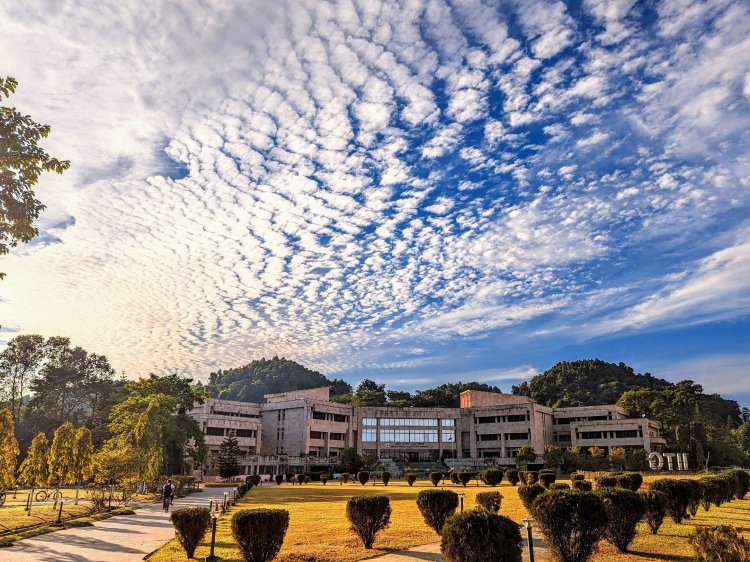
Researchers from the Indian Institute of Technology Guwahati have developed a biological process that uses naturally occurring bacteria to extract lead from acidic industrial wastewater.
Wastewater generated during battery recycling is a major industrial source of lead pollution. According to a World Health Organization Report, exposure to lead can create a negative impact on cognitive development in children, damage the nervous system, and cause long-term health problems.
Conventionally, lead-containing wastewater is treated using chemical processes, which are time-consuming and produce large amounts of lead-containing sludge. This sludge needs to be disposed of separately.
To address these challenges, Prof. Pranab Kumar Ghosh, Professor, Department of Civil Engineering, IIT Guwahati, along with his research scholar, Sreekanth Yadav Golla, have utilised the capabilities of sulphate-reducing bacteria, a group of microorganisms that grow naturally in oxygen-free environments.
The findings of this research have been published in the prestigious Journal of Environmental Chemical Engineering.
Explaining the research, Prof. Pranab Kumar Ghosh said, “Sulphate-reducing bacteria convert sulphate in wastewater into sulphide. This sulphide then reacts with lead dissolved in water to form lead sulphide, a solid mineral that can be easily removed. The process also reduces the acidity of the wastewater, creating better conditions for the bacteria to survive and improving overall treatment efficiency.”
One challenge in using this biological treatment was the microorganisms’ ability to survive in high acidity and metal concentrations in wastewater. To counter this, the research team developed a process that gradually acclimatised the bacteria to increasingly extreme conditions.
Using this approach, the biological reactor removed lead from water and converted lead into solid stable lead sulphide form. This allowed the microorganisms to continue treating the wastewater effectively.
Additionally, the amount of lead-containing sludge produced in this process was lower in comparison to the conventional methods.
Speaking about the bio-sludge produced during the treatment process, Sreekanth Yadav Golla said, “We examined the bio-sludge produced during the treatment process to determine its environmental safety. Most of the lead in the sludge was present in stable forms that do not easily move or dissolve.”
Additionally, leaching tests conducted by the research team revealed that only very small amounts of lead were released from the sludge, with concentrations remaining below regulatory limits. As a result, the bio-sludge may be safely disposed of in engineered municipal landfills, helping minimise long-term environmental risks associated with lead contamination.
It is notable that beyond battery recycling facilities, the developed process can be utilised for treating wastewater from mining, smelting, and metallurgical industries.
As the next step, the research team plans to work on enhancing economic viability by using low-cost carbon sources, minimising sulphide in the treated water, and exploring potential metal recovery.