
ICAR-APEDA Sea Shipment Protocol Slashes Mango Export Costs, Opens New Global Markets
ICAR and APEDA have successfully demonstrated the commercial export of Banganapalli mangoes to Singapore through sea freight, reducing logistics costs by up to 90 percent while maintaining premium fruit quality. The breakthrough is expected to expand India's mango exports to global markets.

 Join the RuralVoice whatsapp group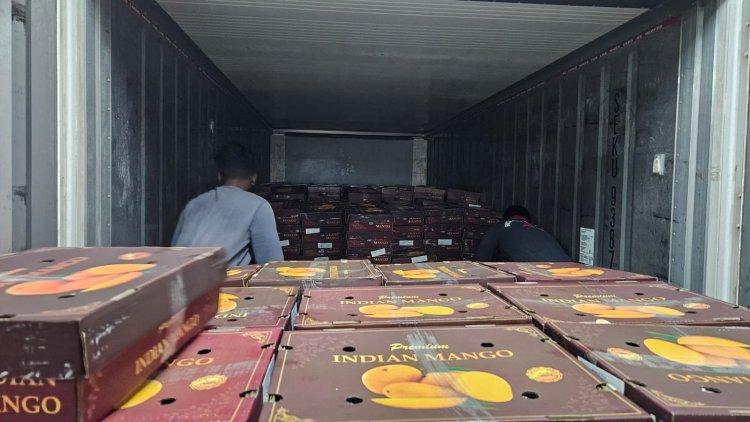
In a major boost to India's horticulture exports, the Indian Council of Agricultural Research (ICAR) and the Agricultural and Processed Food Products Export Development Authority (APEDA) have successfully demonstrated the commercial viability of exporting premium Indian mangoes by sea, significantly reducing transportation costs while maintaining fruit quality.
The breakthrough comes after the successful shipment of Banganapalli mangoes from Andhra Pradesh to Singapore using a scientifically developed sea shipment protocol that extends the fruit's shelf life to up to 30 days. The achievement is expected to make Indian mango exports more competitive in international markets by replacing expensive air freight with cost-effective maritime transport.
The first commercial sea shipment, facilitated by APEDA in collaboration with ICAR's Central Institute for Subtropical Horticulture (ICAR-CISH), Lucknow, consisted of nearly five tonnes of premium Banganapalli mangoes exported by Osum Food Solutions LLP on June 11. The consignment reached Singapore on June 24 after a 16-day journey and was reported to be in excellent condition by the importer, EC-Links Pte Ltd.
According to ICAR, the sea shipment protocol reduces logistics costs dramatically—from Rs 150-250 per kg for air freight to just Rs 13-20 per kg through refrigerated sea containers. The substantial reduction is expected to improve export competitiveness, make Indian mangoes more affordable for overseas consumers, and increase returns for growers.
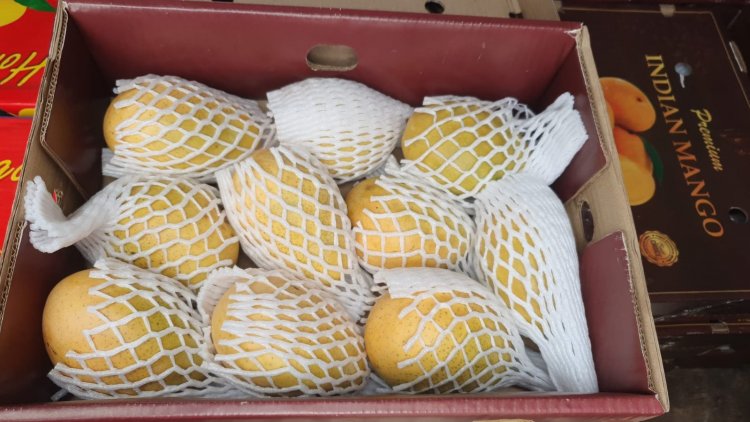
The mangoes were sourced from Good Agricultural Practices (GAP)-certified orchards in Andhra Pradesh and processed at an APEDA-recognised packhouse in Karnataka. Before export, the fruits underwent scientific quality assurance procedures, including Hot Water Treatment (HWT) and CISH-Met Wash technology developed by ICAR-CISH to enhance shelf life, minimise disease incidence and preserve fruit quality during long-distance transportation.
ICAR-CISH scientists monitored the orchards throughout the crop cycle using residue-safe production practices and the institute's biocontrol technology, FUSICONT. The fruits were also tested for Maximum Residue Limits (MRLs) before export to comply with Singapore's stringent phytosanitary standards.
Upon arrival in Singapore, the importer reported excellent fruit quality, praising the mangoes for their sweetness, uniform ripening, shelf life and phytosanitary condition. ICAR said the fruits retained a Total Soluble Solids (TSS) level of 20.1°Brix, showed no disease incidence and matched the quality of air-shipped mangoes despite the longer transit period.
The successful export also translated into better earnings for farmers. While Banganapalli mangoes fetched around Rs 25-26 per kg in the domestic market, the export consignment realised approximately Rs 50 per kg, nearly doubling farm-gate prices.
Officials said the success of the sea shipment protocol could significantly expand India's mango exports to markets such as Singapore, Malaysia and Hong Kong, where annual imports are estimated at around US$4-5 million. It also opens opportunities in larger destinations like the United Arab Emirates, where the mango import market is valued at US$20-25 million.
APEDA said it has been promoting sea freight for fresh fruit and vegetable exports through infrastructure support, market development initiatives and exporter capacity-building programmes. The successful Singapore shipment demonstrates that scientific post-harvest management, robust cold-chain infrastructure and maritime logistics can provide a scalable, environmentally sustainable and commercially viable alternative to air freight.