
ICAR Chief M.L. Jat Backs Balanced Biotech Regulations for Climate-Resilient Agriculture and to Boost Food Security
ICAR Director General M.L. Jat has called for a balanced, science-based regulatory framework to accelerate the safe adoption of modern agricultural biotechnologies. A high-level roundtable organised by TAAS, ICAR and FSII urged streamlined approvals for biotech crops to improve food security, climate resilience, farm productivity and farmers' incomes.

 Join the RuralVoice whatsapp group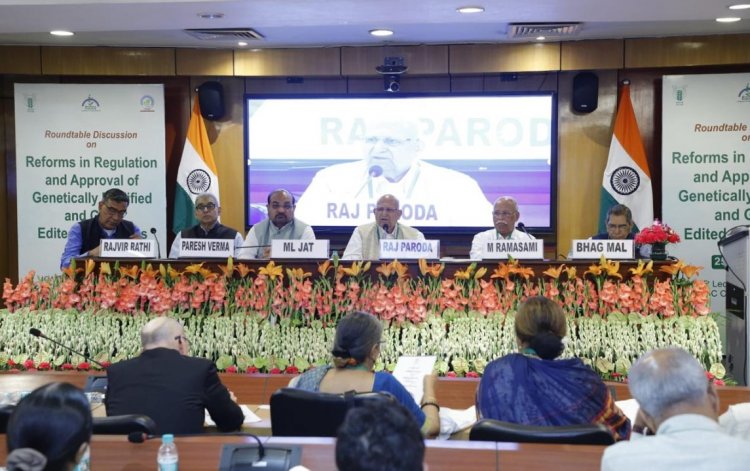
Calling for reforms in India's biotechnology regulatory ecosystem, Indian Council of Agricultural Research (ICAR) Director General M.L. Jat has advocated a balanced and science-driven regulatory framework to enable the safe deployment of advanced biotechnologies in agriculture.
Speaking at a high-level roundtable on biotech crops organised jointly by the Trust for Advancement of Agricultural Sciences (TAAS), ICAR and the Federation of Seed Industry of India (FSII), Jat said modern biotechnology would play a crucial role in ensuring food and nutritional security while helping agriculture adapt to climate change.
Dr Jat, who also serves as Secretary of the Department of Agricultural Research and Education (DARE), reaffirmed ICAR's commitment to promoting evidence-based agricultural innovation.
He emphasised the need for a "balanced regulatory system that facilitates the safe deployment of modern biotechnologies to achieve food and nutritional security, climate resilience, and sustainable agricultural growth".
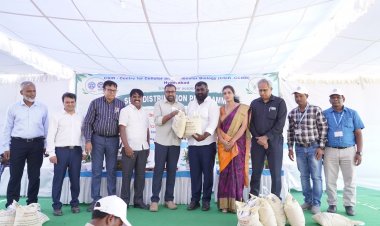
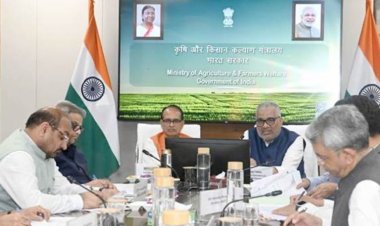
The meeting brought together over 80 stakeholders, including policymakers, regulators, scientists, industry representatives, economists and international experts, to discuss ways of updating India's regulatory framework for biotech crops. The roundtable was co-chaired by TAAS Chairman Dr R.S. Paroda and Rasi Seeds Founder Chairman M. Ramasami.
In his concluding remarks, Dr. R.S. Paroda observed that India possesses the scientific expertise and institutional capacity to become a global leader in agricultural biotechnology. He emphasized that the recommendations emerging from the Roundtable should serve as the basis for modernizing India's regulatory framework and creating an enabling policy environment that promotes responsible innovation while safeguarding human health, biodiversity, and the environment. He further stressed the need to visit the existing multiple guidelines to simplify the testing procedure.
The recommendations emerging from the Roundtable will be consolidated into a comprehensive policy document for submission to the concerned Ministries and regulatory authorities to support evidence-based reforms in the regulation and approval of GM and genome-edited crop plants in India.
According to the Agriculture Ministry, India already has a multi-layered regulatory mechanism governing transgenic crops under the Environment (Protection) Act, 1986, and Rules, 1989. The existing framework includes oversight by Institutional Biosafety Committees, the Review Committee on Genetic Manipulation under the Department of Biotechnology, the Genetic Engineering Appraisal Committee (GEAC), the Food Safety and Standards Authority of India (FSSAI), ICAR and other ministries and state governments.
However, the ministry noted that recent advances in biotechnology, particularly genome-editing technologies such as CRISPR-Cas systems, along with changing global regulatory practices and the growing need for climate-resilient agriculture, have created the need to revisit the existing regulatory architecture.
"Nonetheless, rapid advances in bio technologies, including CRISPR-CAS-based systems, evolving global regulatory practices and the growing need for climate-resilient and sustainable agriculture necessitate a review and modernisation of India's regulatory framework for biotech crops," the ministry said.
The discussions focused on preparing a roadmap for more efficient and time-bound approvals of biotech crops.
During the inaugural session, TAAS Secretary Bhag Mal highlighted the urgency of modernising regulations to address challenges related to climate change, food and nutritional security and sustainable agriculture. Experts including South Asia Biotechnology Centre President C.D. Mayee, ISAAA Executive Director Rhodora Romero-Aldemita and agricultural economist Graham Brookes shared global experiences on regulatory reforms and the economic gains achieved through biotech crop adoption.
The participants recommended a regulatory framework that is science-based, transparent, efficient and proportionate to risk.
"The roundtable called for a science-based, transparent, efficient, and risk-proportionate regulatory framework with streamlined, time-bound approval processes accessible to both public and private innovators," the ministry said.
The participants also observed that faster adoption of safe biotechnology could improve crop productivity, raise farmers' incomes and enhance the global competitiveness of Indian agriculture.