India Bioenergy & Tech Expo 2026 Kicks Off, UP Minister A.K. Sharma Calls Upon Industry to Invest in Bioenergy Ecosystem
India Bioenergy & Tech Expo 2026 began in Greater Noida, with Uttar Pradesh Minister A.K. Sharma urging industry and investors to invest in the state’s growing bioenergy ecosystem. Uttar Pradesh highlighted its leadership in CBG and ethanol, while policymakers stressed technology, investment, skills, biomass utilisation and farmer incomes to drive sustainable growth.

 Join the RuralVoice whatsapp group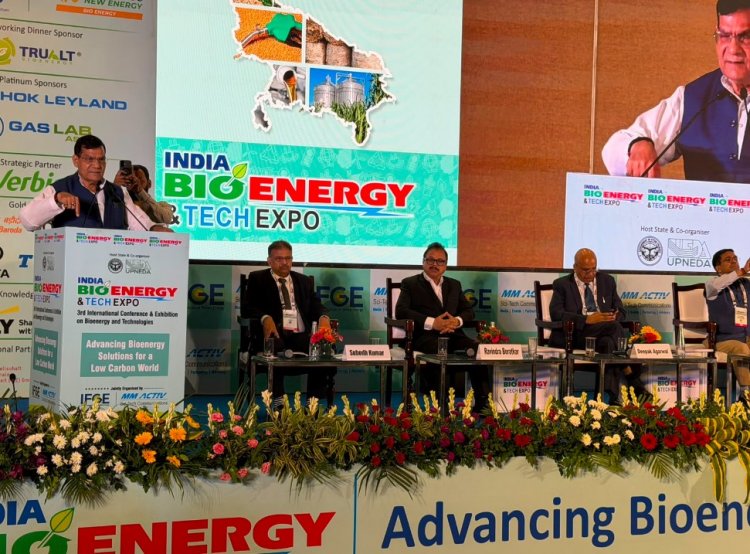
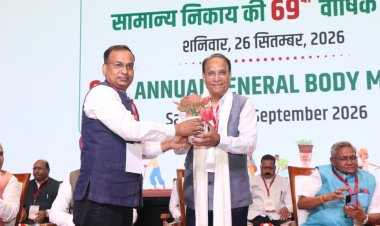
The India Bioenergy & Tech Expo 2026 kicked off today at India Expo Centre & Mart, Greater Noida, bringing together policymakers, industry leaders, investors, technology providers and experts to accelerate the growth of India’s bioenergy sector. The three-day international exhibition and conference, being jointly organised by the Indian Federation of Green Energy (IFGE) and the Uttar Pradesh New & Renewable Energy Development Agency (UPNEDA), Government of Uttar Pradesh, is focused on advancing bioenergy solutions and strengthening the role of clean fuels in India’s energy transition.
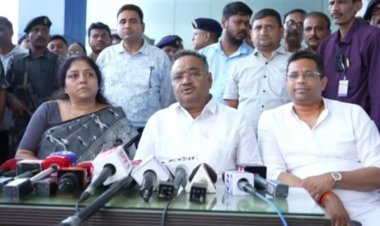
The inaugural session brought together senior policymakers and industry leaders, including Dr. Ashish Kumar Goel, IAS, Additional Chief Secretary, Energy and Additional Sources of Energy, Government of Uttar Pradesh and Chairman, UPNEDA; Awanish Kumar Awasthi, Advisor to Hon'ble Chief Minister of Uttar Pradesh; Pankaj Kumar, Joint Secretary–Transmission, Ministry of Power; Ravinder Singh, Director, UPNEDA; Deepak Ballani, Director General, ISMA; Yashodhan Mankame, Executive Vice President–Bioenergy, Praj Industries, among others.
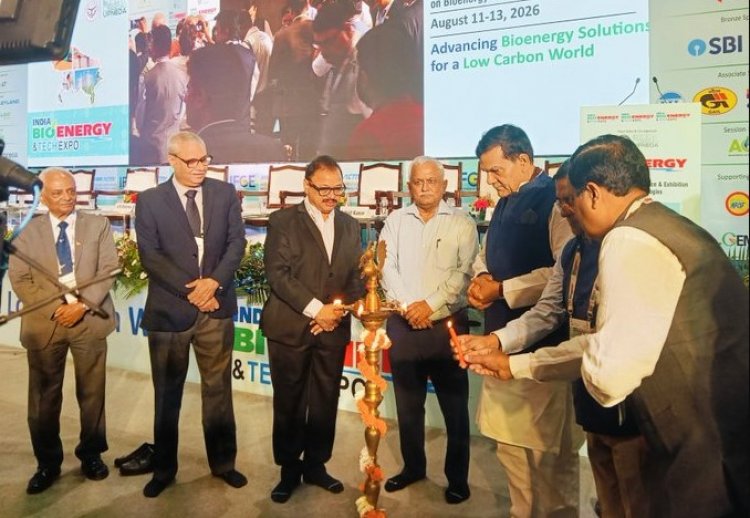
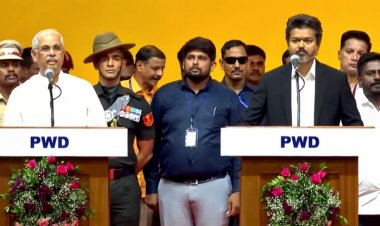
Addressing the Special Plenary Session, A.K. Sharma, Minister for Energy & Additional Sources of Energy, Government of Uttar Pradesh, said, “India Bioenergy & Tech Expo 2026 is a timely and relevant platform as India advances towards energy security and sustainable growth. Uttar Pradesh has emerged as a leading bioenergy hub, ranking number one in CBG production, second in solar energy and number one in the pace of solar panel installations.”
“Building on this momentum, the state is committed to creating a robust ecosystem for bioenergy through enabling policies, technology, investment and skill development. We invite industry leaders and investors to partner with Uttar Pradesh and invest in the state, where the government is committed to providing a stable, supportive and business-friendly environment for bioenergy growth,” he added.
The Minister also said that he would consider the suggestion of establishing Centres of Excellence in bioenergy and tasked the industry with creating a framework to train youth so that they can build sustainable careers in the sector.
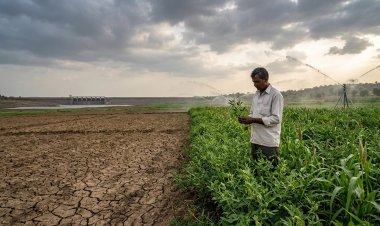
Awanish Awasthi, Advisor to Hon’ble Chief Minister of Uttar Pradesh, said: “Uttar Pradesh has rapidly emerging as a leading force in India’s bioenergy transition, driven by its vast agricultural resources, growing CBG ecosystem and strong policy support. Bioenergy represents a major opportunity to convert agricultural and urban waste into energy, create rural employment and enhance farmers’ incomes.”
“The state is committed to creating an enabling ecosystem for CBG and other bioenergy projects, while addressing issues related to infrastructure, technology and skilled manpower. We also see significant potential to establish CBG equipment manufacturing and Centres of Excellence in Uttar Pradesh, creating new opportunities for our youth. With strong government support and industry partnership, Uttar Pradesh is well positioned to make bioenergy a key driver of its economic and sustainable growth,” he added.
In his address, Dr. Ashish Kumar Goel, IAS, Additional Chief Secretary, Energy and Additional Sources of Energy, Government of Uttar Pradesh and Chairman, UPNEDA, said, “Uttar Pradesh has emerged as the bioenergy capital of India, with more than 30% of the country’s CBG plants located in the state and its position as the country’s second-largest ethanol producer. Our ‘Waste to Wealth’ approach is aimed at converting the state’s abundant biomass into energy, value and sustainable livelihoods for farmers. Through capacity-linked incentives, including capital support of ₹75 lakh per TDP for CBG and ₹75,000 per TDP per year for bio-coal, we are creating a strong investment ecosystem. With 84 CBG and 8 bio-coal plants in the pipeline, UP is committed to scaling bioenergy while strengthening FPOs, cooperatives and farmer incomes.”
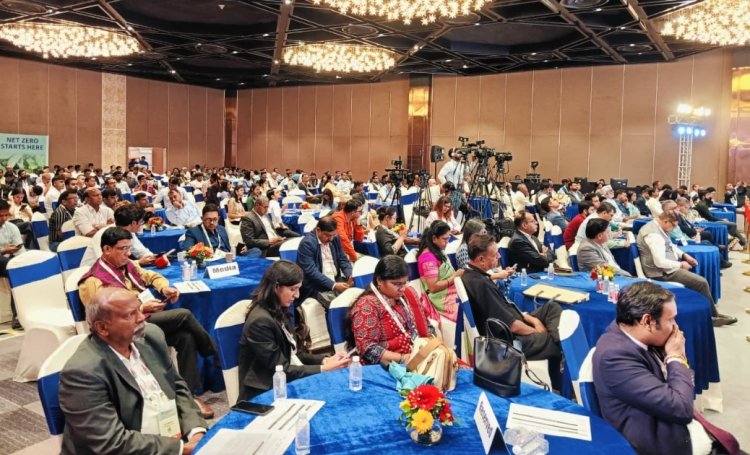
Sanjay Ganjoo, Director General, IFGE, said, “Uttar Pradesh has the scale, agricultural base and policy ambition to emerge as one of India’s most important bioenergy investment destinations. The state’s abundant biomass resources offer a significant opportunity to build new industries while creating value for farmers and generating employment across the rural economy.”
“The next phase of bioenergy growth must bring together investment, technology, industry and skilled manpower to create a commercially viable and sustainable ecosystem. IBET 2026 provides an important platform for industry and investors to engage with the government, explore opportunities in Uttar Pradesh and contribute to building a strong bioenergy economy that creates jobs, strengthens farmer incomes and advances India’s clean-energy ambitions,” he added.
A.K. Sharma also inaugurated the exhibition where the diverse group of exhibitors from across the bioenergy and clean-energy value chain are showcasing technologies, solutions and innovations in CBG, ethanol, biomass, waste-to-energy, biofuels, sustainable aviation fuel, biohydrogen and other emerging clean-energy applications as well as vehicles which include bike, trucks, tractors, etc running on biofuels.
The three-day mega event will also feature discussions and technology showcased across CBG, ethanol, biomass, waste-to-energy, sustainable aviation fuel, biohydrogen, green transport fuels, carbon markets and other emerging bioenergy technologies, with a strong focus on investment, policy, technology partnerships and building sustainable feedstock ecosystems.