
El Niño Impact on Global Summer Crops So Far Limited, Supply Outlook Holds Steady
El Niño has so far had a weaker-than-feared impact on global summer crops. Favourable production prospects in India, China and the U.S. are offsetting losses in drought-hit parts of Europe and Asia. While risks remain until El Niño peaks later this year, reports see little prospect of a global grain or oilseed supply crisis.

 Join the RuralVoice whatsapp group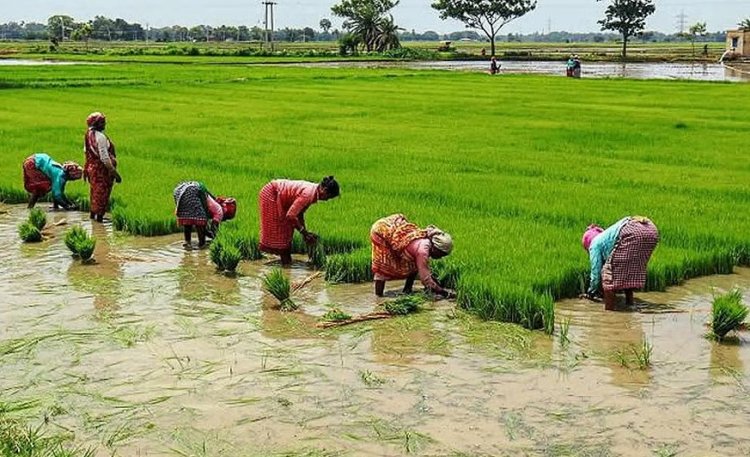
The much-feared impact of the ongoing El Niño weather event on global agriculture has so far been far less severe than expected, with favorable crop conditions in major producers such as India, China and the United States helping offset losses in some drought-hit regions.
While El Niño has affected weather patterns across the world, its impact on grain and oilseed production has remained limited compared with major events such as those of 1982, 1997 and 2015. Weather conditions during the Northern Hemisphere summer have been far from ideal, but current production prospects suggest there is unlikely to be a major global supply shortfall.
El Niño traditionally brings dryness to parts of Asia, particularly from India through Vietnam and into the Philippines, Indonesia and Malaysia. So far, however, Indonesia has been the main area in the region facing significant dryness, while the impact on crops across South and Southeast Asia has been considerably less severe than during previous strong El Niño events.
India’s summer crop outlook has improved significantly after a weak start to the monsoon. Rainfall improved in July in both volume and timeliness, and sufficient soil moisture is now available across most major grain and oilseed producing regions.
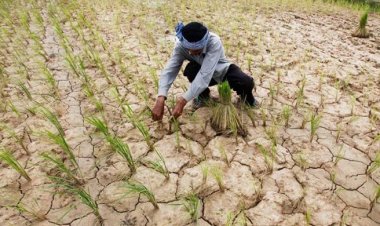
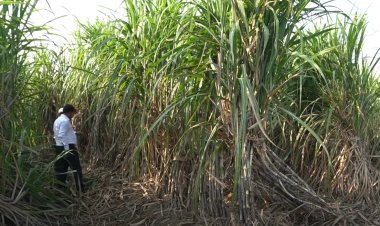
Southern India remains relatively dry, affecting rice, sugarcane, coffee and some minor grain and oilseed crops. However, crop yields depend more on the timing of rainfall and temperatures than on whether cumulative rainfall is above or below normal.
China is also experiencing a largely favorable summer crop season despite some episodes of dryness, excessive rainfall and flooding. These weather events are not expected to significantly affect overall production. However, high temperatures and heavy rain have impacted some key corn, soybean and cotton-growing regions, reducing crop quality and yields,
In the United States, timely rainfall helped crops withstand periods of heat and dryness in the northwestern Corn and Soybean Belt. Some yield losses are expected, but they are unlikely to be large enough to disrupt overall supply. Most of the U.S. The Midwest is heading toward an average to slightly above average crop.
Western Europe is a major exception. France, the United Kingdom, Belgium and parts of Germany are expected to suffer significant yield losses because of prolonged heat and dryness. Parts of southeastern Europe have also recently turned hot and dry, raising concerns over further yield reductions if the conditions persist.
Despite these regional problems, the reports conclude that there is currently no global summer crop production crisis. Existing stocks and reasonably good production in major grain and oilseed producing countries are expected to prevent a major supply deficit or a sharp surge in commodity futures.
El Niño could still become more influential. The event is expected to peak around November or early December, leaving several months for weather conditions to deteriorate. Rice, sugarcane, coffee, cocoa, palm oil, coconut and rubber remain particularly vulnerable. However, from the perspective of global grain and oilseed production, El Niño has so far failed to match the severe impact widely anticipated earlier.
Monsoon in India
India’s monsoon rainfall deficit stood at 13 percent below normal as of August 27, 2026, according to the India Meteorological Department (IMD). However, the overall deficit masks significant regional variations, with eastern and northeastern India among the worst affected regions.
East and Northeast India recorded a rainfall deficit of 27 percent, while the South Peninsula was 22 percent below normal. The deficit was relatively lower in Central India at 2 percent and Northwest India at 10 percent.
The situation is particularly concerning in several states. From June 1 to August 27, Punjab recorded a 34 percent rainfall deficit, while Rajasthan was 21 percent below normal. In the south, Karnataka and Kerala registered deficits of 22 percent and 20 percent, respectively. Among the major deficit-hit states, Andhra Pradesh recorded a 40 percent shortfall, while Bihar faced an even sharper 42 percent deficit.
The Northeast remains particularly vulnerable, with almost all states in the region, barring Tripura and Nagaland, recording significant rainfall deficits. The shortfall in some states has reached as high as 58 percent.