
UK Farming Roadmap 2050 Promises Investment and Innovation, but Asks Farmers to Rely Less on Subsidies
The UK's long-term agricultural roadmap promises billions of pounds in funding, innovation support and fairer supply chains while shifting farmers away from direct subsidies towards environmental payments, technology and private finance. The strategy offers new income opportunities but also raises concerns over compliance costs, investment needs and uncertainty for smaller farms.
 Join the RuralVoice whatsapp group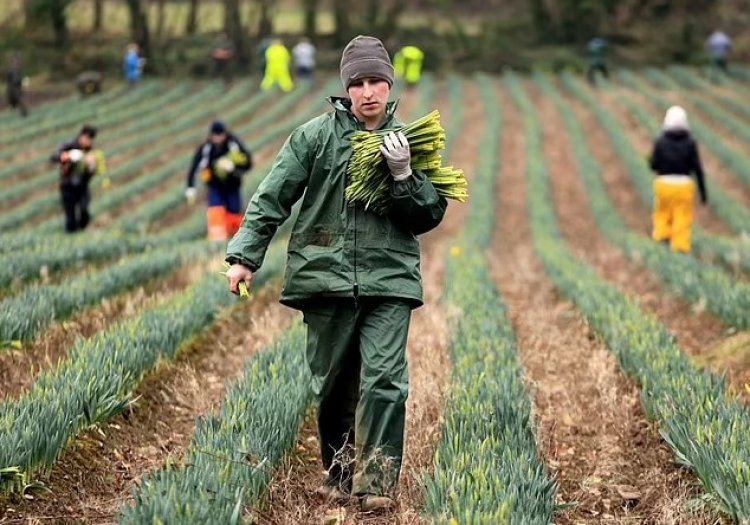
The UK government has unveiled a long-term roadmap to reshape agriculture into a more profitable, productive and environmentally sustainable sector, but the strategy also signals a fundamental shift in how farmers will earn their income. While the roadmap promises billions of pounds in public investment, support for technology and measures to strengthen farmers' position in the supply chain, it expects the sector to become less dependent on direct government support and more reliant on markets, private investment and environmental payments.
The roadmap sets out the government's vision for farming up to 2050, focusing on food security, climate resilience and nature restoration. It commits to maintaining an annual £2 billion budget for Environmental Land Management (ELM) schemes until at least 2029 and allocates £200 million to the Farming Innovation Programme to promote precision agriculture, automation and artificial intelligence. It also includes £1 billion for tree planting and forestry and £300 million for natural flood management to improve long-term agricultural resilience.
For farmers, however, the roadmap marks another step away from the subsidy system inherited under the European Union's Common Agricultural Policy. Instead of area-based payments, future government support will increasingly reward environmental outcomes such as healthier soils, improved biodiversity and lower greenhouse gas emissions. While these schemes offer new income opportunities, they also require farmers to meet stricter environmental standards and invest in new farming practices, raising concerns over compliance costs, particularly for smaller farms.
The government argues that farm profitability should come primarily from producing food efficiently rather than relying on subsidies. To support this transition, it proposes reforms to improve transparency in agricultural supply chains, curb unfair trading practices and strengthen farmers' bargaining power with processors and retailers. The roadmap also aims to expand export opportunities and increase domestic procurement of British produce to improve farm incomes.
Technology forms the backbone of the strategy. Wider adoption of robotics, satellite monitoring, artificial intelligence and precision nutrient management is expected to improve productivity while reducing input costs and environmental impacts. However, modernising farms will require significant upfront investment, and the roadmap provides limited clarity on how smaller family farms will finance the adoption of these technologies despite innovation grants.
The strategy also seeks to address labour shortages by continuing the Seasonal Worker Visa route, which currently allows up to 41,000 seasonal workers, while encouraging greater mechanisation to reduce long-term dependence on seasonal labour.
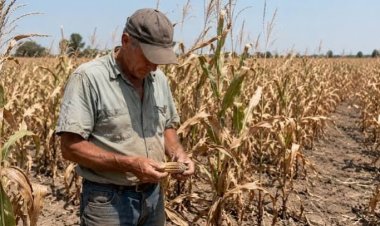
Building resilience against climate change is another key objective. The roadmap promotes drought-resistant crops, better water management, improved animal health and greater flood protection. It also identifies soil restoration as essential for improving productivity, lowering input costs and helping farms withstand increasingly frequent extreme weather events.
A notable feature of the roadmap is its growing emphasis on private finance. The government expects carbon markets, biodiversity credits and other natural capital investments to become important additional income sources for farmers. While these markets could diversify farm revenues, they are still developing, and uncertainty remains over their accessibility and long-term profitability, especially for smaller producers.
The strategy also encourages farmers to diversify through renewable energy, tourism and other non-farm enterprises. However, such opportunities may not be equally accessible across all farming systems or regions, raising questions about whether smaller family-run farms can adapt as easily as larger commercial businesses.
Although the government maintains that increasing domestic food production remains a priority, it stops short of setting binding production targets, arguing that innovation and higher productivity will balance food security with environmental commitments.
Overall, the roadmap presents one of the UK's most comprehensive agricultural strategies since Brexit. It combines significant public investment, innovation and supply chain reforms with a clear expectation that farmers gradually reduce their reliance on direct subsidies. Whether the promised funding, emerging environmental markets and productivity gains can offset the costs of this transition will determine whether the roadmap strengthens farm profitability or places additional pressure on producers already facing volatile markets and climate risks.