
WTO MC14 Set to Expose Deep Divides as Key Trade Issues Head for Stalemate
The WTO’s MC14 in Yaoundé is set to highlight deep divisions between developed and developing countries across agriculture, fisheries, digital trade and institutional reforms. With no consensus on key issues like public stockholding, e-commerce moratorium and dispute settlement, the meeting is expected to deliver limited outcomes, focusing on extensions and future negotiations rather than major agreements.

 Join the RuralVoice whatsapp group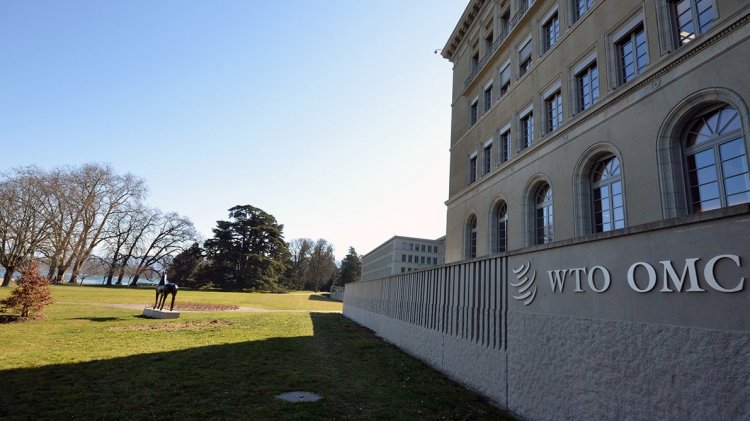
Trade ministers from 166 member countries will meet in Yaoundé from March 26-29 for the 14th Ministerial Conference (MC14) of the World Trade Organization, at a time when global trade has crossed $35 trillion but the multilateral trading system faces serious strain. The meeting comes amid deep divisions between developed and developing countries over critical issues such as agriculture subsidies, public stockholding for food security, fisheries support, digital trade rules and dispute settlement reform.
Think tanks GTRI and RIS mention in their reports that with no consensus on key negotiating texts and entrenched positions on both sides, expectations for major outcomes remain low. Instead, MC14 is widely seen as a “holding” ministerial, likely to focus on extending existing arrangements such as the e-commerce moratorium and peace clause on food stockholding, while deferring contentious decisions. The conference will test the WTO’s credibility as it struggles to balance development priorities with evolving global trade dynamics.
Agriculture Talks: Persistent Deadlock on Core Issues
Agriculture continues to be the most contentious pillar in WTO negotiations, reflecting deep tensions between food security needs and trade liberalisation goals. Discussions revolve around key issues such as public stockholding (PSH), domestic support, market access, export restrictions, cotton and the Special Safeguard Mechanism (SSM).
Developed countries favour a comprehensive negotiation approach, addressing all issues simultaneously. In contrast, developing countries, including India, are pushing for prioritisation of mandated issues such as PSH and SSM, which are directly linked to food security and rural livelihoods.
A major sticking point is the structural imbalance in subsidy rules. Developed nations retain significant policy space due to historical entitlements, while developing countries face tighter limits. This asymmetry has long been criticised as inequitable.
With no agreed negotiating text and divergent positions, agriculture talks are expected to yield only procedural outcomes at MC14, such as reaffirmations or future work programmes, rather than concrete agreements.
Public Stockholding: India’s Key Battleground
India’s public stockholding programme is likely to remain at the centre of debates. Under this system, the government procures foodgrains at Minimum Support Prices (MSP), builds buffer stocks and distributes subsidised food to millions.
However, WTO rules classify such support as trade-distorting, using outdated 1986-88 reference prices. This inflates subsidy calculations and exposes countries like India to potential breaches even when actual support is minimal.
India has consistently argued for a permanent solution, including updating the reference price mechanism and ensuring policy flexibility for food security programmes. It also highlights that developed countries hold nearly 95% of permissible subsidy entitlements.
On the other hand, the United States, European Union and Cairns Group oppose broad exemptions, citing concerns over trade distortion. In the absence of consensus, the interim “peace clause” from 2013 is expected to continue as a temporary safeguard.
The core conflict lies in WTO subsidy rules under the Agreement on Agriculture, which classify procurement at administered prices under the Amber Box. The use of outdated External Reference Prices further complicates the issue.
Developing countries, led by the G-33 and African Group, are demanding reforms such as updating price benchmarks, expanding coverage and ensuring legal certainty. Developed countries, however, remain cautious, citing transparency and trade distortion concerns. Recent global crises, including the COVID-19 pandemic and climate shocks, have reinforced the importance of PSH systems. Yet, negotiations remain stalled due to deep divisions.
Fisheries Subsidies: Balancing Sustainability and Livelihoods
Fisheries negotiations have entered a crucial phase following the 2022 agreement on Illegal, Unreported and Unregulated (IUU) fishing. The current focus is on addressing subsidies contributing to overcapacity and overfishing.
Globally, fisheries support over 100 million jobs, with the majority in small-scale sectors in developing countries. However, subsidy distribution remains highly unequal, with only a small share reaching artisanal fishers.
India has argued that its subsidies are aimed at small-scale fishers and should not be treated on par with industrial subsidies. It is seeking strong Special and Differential Treatment (S&DT) provisions and longer transition periods.
Developed countries, meanwhile, advocate stricter rules to curb environmental damage. With positions far apart, a final agreement on broader fisheries subsidies is unlikely at MC14.
E-Commerce Moratorium: Digital Divide Concerns Intensify
The WTO’s long-standing moratorium on customs duties on electronic transmissions has become a major flashpoint. While developed countries want to make the moratorium permanent to promote digital trade, developing countries oppose it.
India has raised concerns over revenue loss, policy constraints and the impact on domestic digital industries. As global trade increasingly shifts to digital platforms, the inability to impose tariffs could widen the digital divide.
The most likely outcome at MC14 is a temporary extension of the moratorium, with no permanent resolution in sight.
Dispute Settlement Crisis: Paralysis Continues
The WTO’s dispute settlement system, once its strongest pillar, remains in crisis. Since 2019, the Appellate Body has been non-functional due to a blockage in appointments, largely driven by U.S. objections. This has weakened the enforcement of trade rules, as disputes can now be appealed “into the void,” preventing final rulings. While interim arrangements like MPIA exist, they lack universal acceptance.
India supports restoring a fully functional two-tier dispute settlement system. However, the United States continues to push for reforms limiting judicial overreach. With no consensus, MC14 is unlikely to deliver a breakthrough, leaving the system weakened.
WTO Reform: Clash Over Consensus vs Flexibility
Institutional reform is another major area of disagreement. Developed countries advocate for more flexible decision-making mechanisms, including plurilateral agreements, to overcome negotiation deadlocks.
India and several developing countries strongly defend the consensus-based approach, arguing it ensures fairness and equal participation. They warn that moving away from consensus could marginalise smaller economies and undermine development priorities.
Reform discussions also focus on enhancing transparency, participation and addressing emerging issues such as digital trade and sustainability. However, deep divisions make significant progress unlikely.
Conclusion: A ‘Holding’ Ministerial Amid Global Shifts
Across all major issues- agriculture, fisheries, digital trade, dispute settlement and institutional reform- MC14 is expected to reflect entrenched divisions rather than deliver decisive outcomes.
For India, the focus will remain on safeguarding policy space, defending food security programmes and building alliances with developing countries. More broadly, the conference highlights a fundamental challenge: adapting the multilateral trading system to a rapidly changing global economy.
As global trade crosses $35 trillion, the WTO faces a critical test of relevance and credibility, with MC14 likely to extend existing arrangements rather than resolve long-standing disputes.