
Gulf Conflict Strains India’s Agriculture; Fertiliser, Fuel and Exports Under Pressure
The West Asia conflict involving the United States, Israel and Iran has disrupted India’s agriculture through rising fertiliser, energy and logistics costs. Heavy import dependence and export exposure to Gulf markets have intensified risks, with urea production hit, shipments stalled and input prices surging. The crisis threatens farm profitability, food security and inflation outlook ahead of the Kharif season.

 Join the RuralVoice whatsapp group
More than two months into the conflict involving the United States, Israel and Iran, its impact is being felt far beyond the battlefield - deep within India’s farms and food systems. What began as a geopolitical flashpoint is fast evolving into an economic stress test for Indian agriculture, disrupting fertiliser supplies, energy availability and export flows.
India’s heavy reliance on West Asia for key farm inputs lies at the centre of this disruption. Urea, the backbone of fertiliser consumption, is particularly exposed, with nearly three-fourths of imports in 2024-25 sourced from the region. As supply chains come under strain, uncertainties are rising not only for finished fertilisers but also for raw materials. While urea prices remain regulated, allied sectors such as pesticides and packaging are witnessing cost pressures that companies are likely to pass on to farmers.
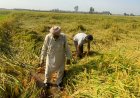
On the export front, the situation is equally concerning. West Asia accounted for $11.8 billion of India’s agricultural exports in 2025, or 21.8% of the total. However, hostilities that began on February 28 caused immediate disruptions. Around 4 lakh tonnes of basmati rice were stranded at ports or in transit, while shipments of fruits and other perishables were abruptly halted, putting both exporters’ margins and farmers’ incomes at risk.
Energy has emerged as another major pressure point. Iran’s retaliatory strikes disrupted gas supplies across key Gulf nations - Qatar, the UAE, Kuwait, Bahrain and Saudi Arabia - directly impacting India, where gas is a critical input for urea production. As a result, most domestic urea plants are operating at barely 60% capacity. In response, the government invoked the Essential Commodities Act on March 9, mandating that 70% (later revised upwards) of average six-month gas supplies be prioritised for fertiliser production. As per update from the Ministry of Petroleum & Natural Gas on 2nd May 2026, the overall gas allocation to fertiliser plants has been enhanced to approximately 98% of their six-month average consumption.
Freight and logistics have also been severely affected. The Strait of Hormuz, a vital trade route along Iran’s coastline, has seen disruptions due to blockades, pushing container freight rates up by two to three times. Insurance and war-risk premiums have surged, while bunker fuel prices have risen from $520 to $700 per tonne. Longer shipping routes have extended transit times from 25-30 days to 35-45 days, sharply increasing costs.
The broader stakes are significant. Nearly 30% of global crude oil and LNG trade passes through the Strait of Hormuz. India imports about 60% of its LPG - 90% from Gulf nations - and depends on Qatar and the UAE for nearly half its LNG needs. Although some shipments have resumed through diplomatic efforts, stability remains uncertain.
Meanwhile, the rupee has crossed 95 per dollar, making imports costlier. The energy shock is stark: India imports 85-90% of its crude oil, with petroleum accounting for up to a third of its import bill. Brent crude has surged over 50% from $70 to $110 per barrel, intensifying economic pressures.
Impact on the Fertiliser Sector
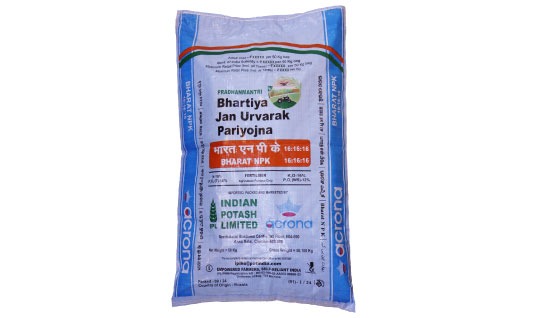
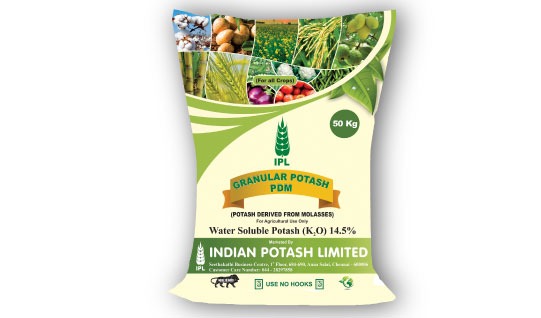
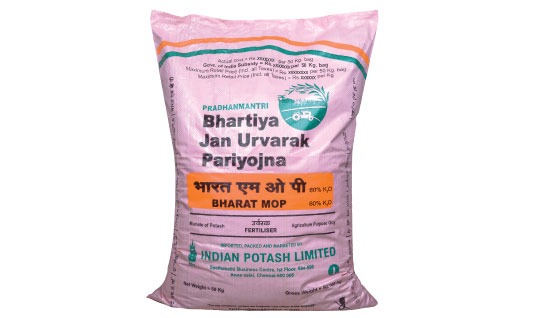
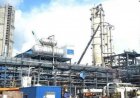
Agriculture depends on a delicate balance of three key nutrients - nitrogen, phosphorus and potash. Nitrogen production relies on natural gas, phosphorus, sulfur, and potash is sourced from geographically concentrated mineral reserves. For perhaps the first time in recent history, all three pillars are under simultaneous pressure.
The disruption of shipping routes through the Strait of Hormuz has sent shockwaves across global fertiliser markets. International urea prices have surged to nearly $700 per tonne, up sharply from sub-$500 levels before the conflict, highlighting the severity of the supply shock.
At an inter-ministerial review on 30th March, Fertiliser Ministry Additional Secretary Aparna S. Sharma noted that India has diversified its import sources to Russia, Morocco, Australia, Algeria, Egypt, Indonesia, Malaysia and Canada. However, diversification has not shielded the country from rising costs. Fertiliser stocks currently stand at about 18 million tonnes, compared with 14 million tonnes a year ago. With Kharif demand estimated at 39 million tonnes, supply adequacy remains a concern.
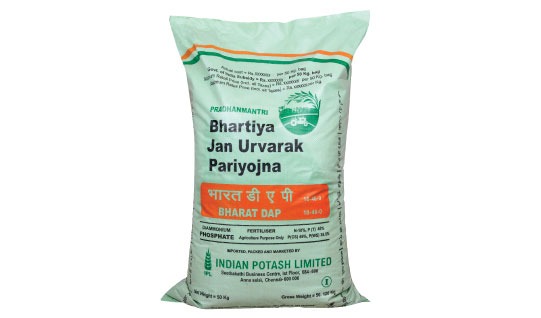
India’s structural import dependence continues to weigh heavily. Annual urea consumption is around 40 million tonnes, of which nearly 10 million tonnes are imported. Dependence is even higher for di-ammonium phosphate (DAP), where imports meet almost the entire annual demand of about 10 million tonnes.
Dr. Biswajit Dhar, former professor at Jawaharlal Nehru University, flags a deeper vulnerability. “India has traditionally been dependent on the Gulf Region for its supplies of nitrogenous fertilisers. 75% of urea imports were sourced from this region in 2024-25, most of which came through the Strait of Hormuz. There cannot be any doubt that this large dependence on one region for meeting India’s needs of a critically important product for the fledgling agricultural sector is in itself a sign of considerable vulnerability, and this fact has been severely exposed by the war in West Asia,” he notes.
Phosphate fertilisers are also caught in geopolitical crosscurrents. According to the Center for Strategic and International Studies, around 20% of global phosphate trade originates from countries linked to the Strait of Hormuz, with Saudi Arabia and Israel accounting for nearly 17% of exports.
Sulfur adds another layer of complexity. As a by-product of oil and gas processing, its supply is tied to energy markets. Nearly 45% of global seaborne sulfur trade comes from this region, making supply chains vulnerable. Meanwhile, nitrogen-based chemicals such as nitric acid face fresh pressure, with Iran’s production disruptions tightening availability further.
Threats to Food Security
Nitrogen, phosphorus and potassium dominate global fertiliser use, with nitrogen alone accounting for 59% of total consumption in 2023, according to the Center for Strategic and International Studies (CSIS). Phosphates and potash follow at 21% and 20%, respectively. Nearly 45% of nitrogen fertilisers are used in staple cereals such as wheat, rice and maize, underlining their centrality to global food security.
The Asian Development Bank (ADB) warns that disruptions in key agricultural inputs are already rippling through global markets. The Middle East, which supplies nearly half of global urea exports and about 30% of ammonia, has become a critical pressure point. Any prolonged disruption risks tightening supplies and triggering sharp global price spikes.
Máximo Torero, Chief Economist at the Food and Agriculture Organization (FAO), describes disruptions in this corridor as among the most severe shocks to global commodity trade in recent years. The concerns are already visible: within days of the conflict, tanker traffic through the strait fell by over 90%. Under normal conditions, nearly 20 million barrels of crude oil, around 35% of daily global trade, pass through this route.
According to Joseph Glauber of the International Food Policy Research Institute (IFPRI), the Persian Gulf exported 10.9 million tonnes of urea in 2023. Qatar accounted for 44%, followed by Saudi Arabia (31%), Oman (19%) and Bahrain (5%). Saudi Arabia also led in other segments, exporting 2.9 million tonnes of DAP and accounting for 61% of the region’s anhydrous ammonia exports, with Qatar and Oman contributing 29% and 8%, respectively. Disruptions across these suppliers are heightening uncertainty in global fertiliser markets.
The crisis extends beyond production and trade to food access. Gulf countries are heavily import-dependent for food, making them vulnerable to supply shocks. As ICAR National Professor and MS Swaminathan Chair Smita Sirohi notes, West Asia relies significantly on imports of staples like rice. India plays a stabilising role: Iran meets about 30% of its rice demand through imports, with India supplying roughly 43% of that share.
Alternative fertiliser sourcing remains difficult. Russia, accounting for about 14% of global nitrogen fertiliser exports, faces domestic demand pressures alongside ongoing disruptions from the Russia-Ukraine war. China has curbed urea exports and restricted nitrogen-potash shipments to protect domestic supply, tightening global availability. Meanwhile, the United States is entering its peak spring sowing season, adding further strain.
Warning signs are already evident. The FAO estimates that fertiliser prices could rise 15-20% in the first half of 2026 if the crisis persists, pushing up farm input costs and fuelling food inflation. The ADB echoes this concern, cautioning that rising input costs could intensify inflationary pressures across emerging economies.
Tightening the Domestic Net
Back home, policymakers are moving pre-emptively to avert a potential fertiliser supply squeeze by tightening oversight of sales and distribution. In a review meeting, Union Agriculture and Farmers’ Welfare Minister Shivraj Singh Chouhan directed officials to fast-track Kisan ID rollout to enhance transparency. The move builds on a pilot in four states, where Aadhaar- and Kisan ID-based authentication enabled real-time tracking of fertiliser purchases. At the core is AgriStack, a digital repository with 92.4 million farmer IDs integrated by states. The aim is to curb misuse, prevent overuse, and check diversion, with transactions increasingly monitored via point-of-sale systems.
Rising Input Costs to Push Up Pesticide Prices
Pesticides are set to become costlier, adding to the financial strain on farmers ahead of the Kharif season. Agrochemical companies indicate that escalating input costs are forcing a price reset, with fresh production likely to enter the market at significantly higher rates.
A senior executive at a leading agrochemical firm points out that refineries have raised petrochemical prices by 25-30% amid the surge in crude oil costs. Packaging materials, too, have become pricier, with increases ranging between 15% and 30%. Suppliers are renegotiating even pre-existing contracts at elevated rates, further tightening cost structures.
Crucially, key inputs such as solvents and emulsifiers, integral to pesticide formulations, have seen sharp price escalations. With pesticide demand typically peaking during the Kharif season, the ripple effect will be felt directly by farmers, translating into higher cultivation costs at a time of already squeezed margins.
In response to the unfolding crisis in West Asia, the government has constituted seven empowered groups to closely monitor sectoral impacts, including one dedicated to agricultural inputs. While officials maintain that fertiliser supplies remain stable for now, concerns persist that a prolonged conflict could disrupt availability.
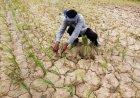
Even before the current geopolitical tensions, farmers in several regions had reported difficulties in accessing fertilisers. Today, the sector faces a dual challenge - uncertain input availability on one side and weakening output prices on the other.
Historically, agriculture has played a stabilising role during economic downturns. Yet, a clear policy roadmap for supporting the sector through the current turbulence remains elusive. Experts suggest that relying solely on fertiliser subsidies may prove inadequate this time, calling for broader and more targeted interventions.
Export Dependence on Gulf Markets
India’s agricultural exports remain heavily dependent on West Asian markets, leaving them exposed to geopolitical disruptions. According to the Global Trade Research Initiative (GTRI), India exported rice worth $4.43 billion to the region in 2025, accounting for 36.7% of total rice exports. Nearly 70% of basmati shipments go to countries such as Iran, Saudi Arabia, Iraq, and the UAE, with Iran alone contributing 15-20%. The ongoing disruption now threatens exports worth $1.2 billion to Iran.
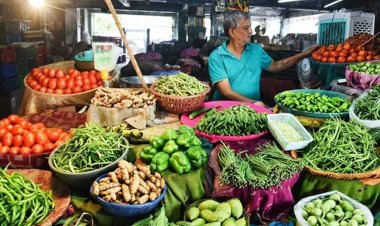
The dependence extends across commodities. West Asia accounted for 79.6% of India’s banana exports, valued at $396.5 million last year. Onion and garlic exports stood at $111 million, while other vegetables were valued at $91.5 million, with 26.9% and 50.8%, respectively, shipped to the region. A significant share of tea, coffee, and processed fruit and nut exports is also tied to these markets, with Iran importing 15-20% of India’s tea.
The Gulf’s dominance is even sharper in select segments. In 2025, over 70% of exports of spices like nutmeg, mace, and cardamom, and 98.9% of sheep and goat meat exports went to the region. Additionally, 58.1% of butter and 81% of beer exports were destined for Gulf countries, highlighting the urgent need for diversification.