Iran War Hits India’s Basmati Exports as Shipments Fall 27% in April, Domestic Prices Down 10%
India’s basmati rice exports fell 26.72 percent in April 2026 due to the ongoing West Asia conflict and geopolitical tensions in the Gulf region, disrupting shipments to key markets such as Iran and Saudi Arabia. Rising shipping and insurance costs have further hurt trade, while non-basmati rice exports recorded strong growth during the month.

 Join the RuralVoice whatsapp group
The ongoing war in West Asia and geopolitical tensions in the Gulf region have affected India's basmati rice exports. India’s basmati rice shipments registered a steep decline in April 2026, even as the country’s overall rice exports increased by nearly 9 percent during the month.
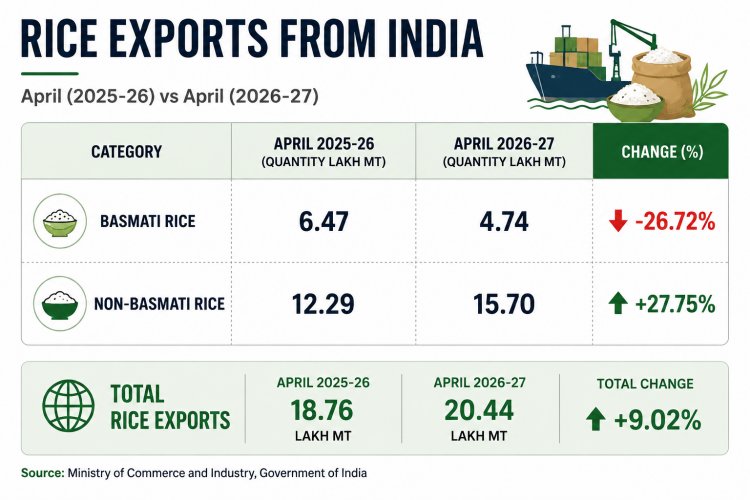
According to data released by the Agricultural and Processed Food Products Export Development Authority (APEDA), India exported 4.74 lakh tonnes of basmati rice in April 2026, compared with 6.47 lakh tonnes in April 2025. This marks a year-on-year decline of 26.72 percent.
The sharp fall in exports has also affected domestic basmati prices, which have declined by 8-10 percent in recent weeks. Before the Iran conflict escalated, basmati rice prices were around Rs 88-90 per kg, but they have now fallen to nearly Rs 78-80 per kg.
India is the world’s largest rice exporter, and the ongoing conflict has dealt a major blow to the country’s annual basmati export trade worth nearly Rs 50,000 crore. Indian basmati rice is primarily exported to Gulf countries including Iran, Saudi Arabia, Iraq and the United Arab Emirates.
The decline in basmati exports could also affect paddy sowing during the upcoming kharif season, as lower prices may discourage farmers from planting basmati varieties.
Sushil Kumar Jain, President of the Haryana Rice Exporters Association, told Rural Voice that exports of basmati rice to Iran and Afghanistan have been severely disrupted due to the conflict. “Movement of ships has almost stopped because of the war situation, which caused a major decline in April exports,” Jain said. “Shipping and insurance companies have increased charges several times due to disruptions in maritime routes, and this is affecting trade.”
Exporters have sought relief measures and alternative shipping support from the central government in view of rising logistics costs and export disruptions.
According to Jain, exporters have also demanded suspension of the Rs 70 per tonne levy imposed on basmati exports for the Basmati Export Development Fund (BEDF), under which nearly Rs 45 crore is collected annually. He added that the government has capped the 3 percent interest subvention benefit for exporters at Rs 50 lakh, and exporters are demanding removal of this limit as well.
Non-Basmati Rice Exports Rise
Despite the decline in basmati shipments, India’s non-basmati rice exports increased significantly in April 2026, helping total rice exports rise to 20.44 lakh tonnes from 18.76 lakh tonnes in April 2025.
India exported 15.70 lakh tonnes of non-basmati rice in April 2026, compared with 12.29 lakh tonnes during the same period last year. India mainly exports non-basmati rice to African countries and Bangladesh.
India’s domestic rice market is already under pressure due to record rice production of 154 million tonnes during 2025-26. In this situation, higher non-basmati exports have provided some relief. However, the outlook for basmati exports in the coming months remains uncertain.
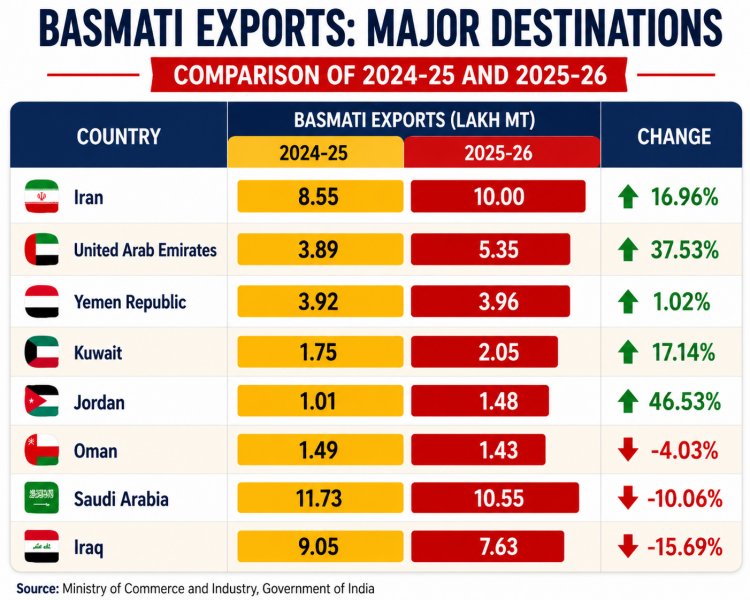
Amid fears of war, Iran had already imported and stockpiled nearly 1.5 lakh tonnes more basmati rice from India during 2025-26. India also recorded higher basmati exports to the UAE, Yemen, Kuwait and Jordan during the year.
As a result, India achieved record basmati rice exports of 65.21 lakh tonnes in 2025-26, compared with 60.65 lakh tonnes in 2024-25. However, the new financial year has begun with a sharp slowdown in basmati shipments.