
Kharif Sowing Gap Narrows to 1.60 percent, but Paddy Acreage Deficit Widens to 3.74 percent
Paddy acreage remains 3.74

 Join the RuralVoice whatsapp group
The gap in kharif crop sowing has narrowed, but the pace of planting remains below last year, particularly in paddy. As of September 4, the total area under kharif crops stood at 1,086.31 lakh hectares, 1.60 percent lower than the 1,104 lakh hectares covered during the corresponding period last year.
According to data available on the Agriculture Ministry’s UPAg (Unified Portal for Agricultural Statistics), the acreage gap has improved from 1.73 percent a week earlier. Total kharif coverage increased by 15.21 lakh hectares over the past week, reducing the absolute gap with last year from 18.91 lakh hectares to 17.69 lakh hectares.
Paddy gap widens
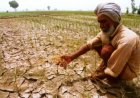
Paddy remains a key area of concern. Its acreage deficit widened during the week to 3.74 percent, compared with 3.35 percent a week earlier.
Paddy has so far been planted over 421.82 lakh hectares, against 438.19 lakh hectares during the same period last year. Despite the year-on-year shortfall, the current acreage remains above the previous years’ average of 412 lakh hectares.
Pulses show improvement
The overall area under pulses has moved ahead of last year, although it remains below the long-term average. Pulse sowing has reached 117.13 lakh hectares, compared with 115.30 lakh hectares last year, but is still below the previous years’ average of 123.63 lakh hectares.
Tur acreage has increased to 45.66 lakh hectares from 44.93 lakh hectares, while urad has risen significantly to 25.15 lakh hectares, compared with 22.46 lakh hectares last year.
Coarse cereals recover
The deficit in coarse cereal acreage has narrowed sharply, falling from 2.31 percent a week ago to just 0.60 percent.
Ragi has recorded the steepest decline, with acreage down 13.30 percent at 7.60 lakh hectares against 8.77 lakh hectares last year. Maize acreage is also lower at 91.09 lakh hectares compared with 94.08 lakh hectares.
However, acreage under jowar, bajra and other small millets has increased by 7.73 percent, 3.16 percent and 2.58 percent, respectively.
Oilseed acreage marginally lower
The oilseed sowing gap has widened marginally to 0.56 percent, from 0.52 percent a week earlier.
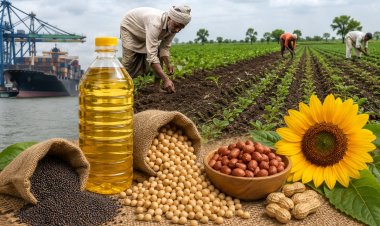
Soybean acreage stands at 121.82 lakh hectares, compared with 122.98 lakh hectares last year. Groundnut acreage is also lower at 49.61 lakh hectares against 50.44 lakh hectares.
On the positive side, sesame acreage has increased to 10.94 lakh hectares from 9.50 lakh hectares, while sunflower acreage has nearly doubled to 1.25 lakh hectares from 0.64 lakh hectares. Niger seed acreage is up 13.29 percent, whereas castor seed has declined 13.61 percent.
Cotton and sugarcane slightly behind
Sugarcane acreage stands at 58.47 lakh hectares, marginally below 58.87 lakh hectares last year, but comfortably above the previous years’ average of 54.20 lakh hectares.
Jute and mesta acreage has increased slightly to 6.34 lakh hectares from 6.24 lakh hectares. Cotton, however, remains marginally behind last year at 109.17 lakh hectares, compared with 109.87 lakh hectares, a decline of 0.63 percent.
With the kharif sowing season nearing its end, the coming weeks will be crucial for determining the final crop area. While improved acreage in pulses and several millet crops provides some support, the continued shortfall in paddy, soybean, maize and cotton will remain important for the outlook on foodgrain and agricultural commodity supplies.