
Maize Farmers May Get Below-MSP Prices at Harvest: TNAU Pre-Sowing Price Forecast
Maize Farmers May Get Below-MSP Prices Despite Strong Ethanol Demand, Record maize production and increased availability of FCI rice for ethanol production could weigh on maize prices

 Join the RuralVoice whatsapp group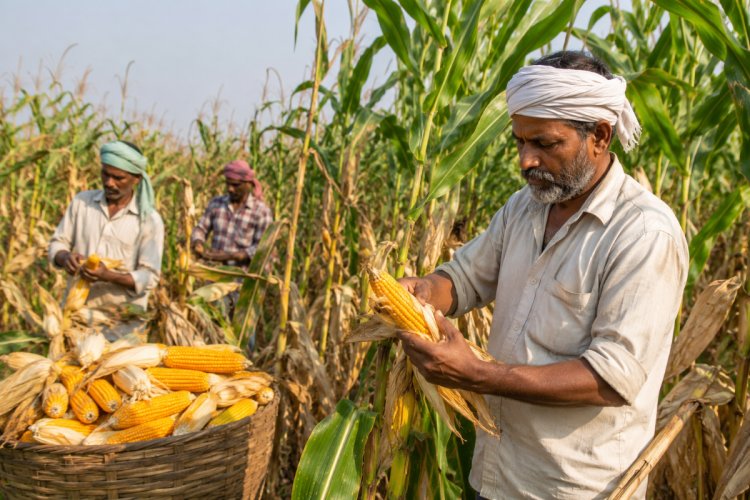
Tamil Nadu Agricultural University (TNAU) has forecast that farmgate prices of good-quality maize are likely to remain between Rs 2,200 and Rs 2,400 per quintal during the October-November 2026 harvest period, raising concerns that farmers could receive prices below the government-declared minimum support price (MSP).
The Centre has fixed the MSP for maize at Rs 2,410 per quintal for the 2026-27 marketing season. The MSP was Rs 2,400 per quintal in 2025-26, meaning it has been increased by only Rs 10 per quintal for the current season.
The price forecast has been issued by the Domestic and Export Market Intelligence Cell (DEMIC) under TNAU's Centre for Agricultural and Rural Development Studies (CARDS). The university said the forecast was based on an analysis of maize prices at the Udumalpet regulated market over the past 15 years, along with a market survey.
Farmers have been advised to take appropriate sowing decisions based on the expected price outlook.
Record Maize Production
According to the Third Advance Estimates of the Union Ministry of Agriculture and Farmers' Welfare, India's maize production is estimated at a record 55.10 million tonnes in 2025-26.
Maize demand in India is no longer limited to food and animal feed. Growing industrial use, ethanol production and emerging applications such as bioplastics have significantly changed the demand structure of the domestic maize market in recent years.
TNAU said demand for maize has been gaining nutritional and commercial significance, driven by the feed industry, industrial consumption, ethanol blending under the National Policy on Biofuels and bioplastic applications.
Leading Ethanol Feedstock
India's ethanol blending programme has created a major new source of domestic demand for maize. In the ongoing Ethanol Supply Year (ESY) 2025-26, which runs from November to October, grain-based ethanol accounts for nearly 67 per cent of total supplies, with maize emerging as the single largest feedstock.
Up to June 2026, total ethanol supplies reached around 717 crore litres. Of this, maize accounted for 258 crore litres, or about 36 per cent of total ethanol production. Ethanol produced from Food Corporation of India (FCI) rice contributed around 177 crore litres, or nearly 25 per cent, while sugarcane juice accounted for about 20 per cent.
Despite strong demand from the ethanol sector, maize farmers in several parts of the country are struggling to realise even the MSP. Increased availability of FCI rice for ethanol production is seen as one of the factors putting pressure on maize prices, as distilleries have greater flexibility in choosing between grain feedstocks.
Factors Shaping Maize Price Outlook
Several opposing factors are currently influencing the maize market. On the supply side, high domestic production and the increased availability of rice for ethanol production could keep maize prices under pressure. On the demand side, strong demand from ethanol distilleries, the poultry and feed industries, and other industrial users could support prices.
Weather remains another major uncertainty. TNAU said below-normal rainfall associated with El Niño could affect maize production in major producing states, including Karnataka, Madhya Pradesh, Andhra Pradesh, Bihar and West Bengal. At the same time, the university noted that the previous year's bumper harvest, the West Asia crisis and rising fuel costs affecting exports and domestic trade could influence market dynamics.
In February this year, India and the United States agreed, under an interim framework for a trade deal, to allow duty-free imports of US soya oil and distillers dried grains with solubles (DDGS). Following the announcement, maize prices declined in February and farmers had to sell maize below MSP. DDGS is a co-product of maize-based ethanol production and is used as animal feed.