India Produces 500 MT+ Crop Residues, But Much of Their Feed Potential Remains Untapped
India generates more than 500 million tonnes of crop residues annually, offering a vast but underutilised resource for livestock feed. An ICAR assessment says poor nutritive value, low digestibility, transportation constraints and competing non-feed uses limit their potential. Better processing, enrichment and use of agro-industrial by-products could strengthen India’s feed security.

 Join the RuralVoice whatsapp group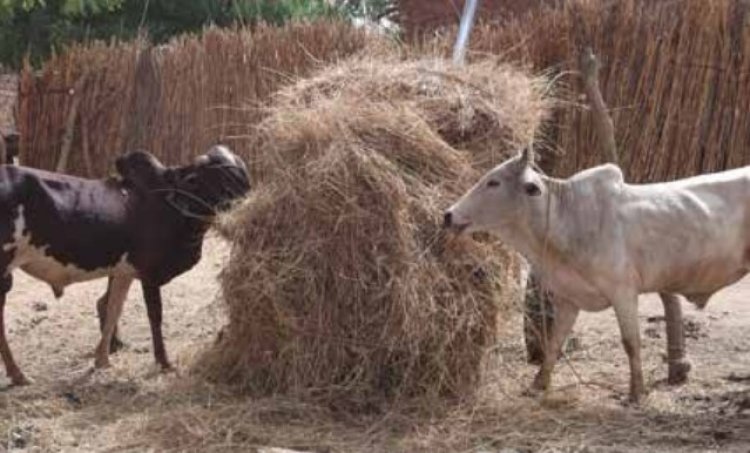
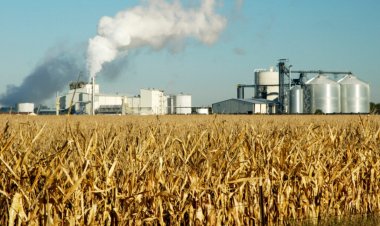
India’s livestock sector may be facing a feed challenge, but the country also has a massive resource sitting in its fields: more than 500 million tonnes of crop residues generated every year. The Indian Council of Agricultural Research (ICAR), in its Comprehensive Assessment of Feed and Fodder Resources for Increased Livestock Production in India, identifies crop residues as the largest feed resource available in abundance and says improving their utilisation should be a major research priority.
The opportunity is significant because India’s livestock sector is growing rapidly. Yet the report estimates that under practical feeding conditions, the country faces a 14.1% deficit in green fodder and 37.5% deficit in concentrate feed, while dry fodder has a smaller 2.4% deficit.
500 MT crop residue resource
Crop residues primarily comprise the plant material left after harvesting food crops such as paddy, wheat, maize, sorghum and pulses. They constitute the main source of dry fodder for cattle, buffaloes, sheep and goats.
The assessment estimates total dry-fodder availability from crop residues at around 508.03 million tonnes. The estimate covers residues from food grains, pulses, oilseeds, groundnut and sugarcane.
Also Read - India Faces 37.5% Concentrate Feed Deficit as Livestock Productivity Push Raises Demand
However, the entire quantity cannot be considered available for livestock. A significant share of residues has competing uses, including packaging, biomass-based power generation and fuel. The report also points out that actual utilisation of different feed resources is not fully documented, meaning that estimates of feed availability remain broad-based.
The problem is quality, not just quantity
The biggest limitation is that abundance does not necessarily translate into nutritional adequacy. Most conventional crop residues have low levels of energy, protein, vitamins and available minerals and poor digestibility. Except for some legume residues such as groundnut haulms, horse gram and soybean residues, they may not even meet the maintenance requirements of livestock without supplementation.
The material is also bulky, requires substantial storage space and is expensive to transport because of its low bulk density. These characteristics make it difficult to move residues economically from areas of production to livestock farms or feed-processing facilities. This means that simply collecting more crop residue will not solve India's feed problem. The challenge is to convert a large quantity of relatively low-quality biomass into nutritionally useful livestock feed.
Paddy straw: a major missed opportunity
The report specifically highlights paddy straw burning in Punjab, Haryana and western Uttar Pradesh as an example of resource wastage. Millions of tonnes of paddy straw are burned every year to clear fields for the next crop. Apart from contributing to pollution, burning destroys a resource that could potentially be used for livestock feeding.
The assessment's crop-residue calculations also take regional utilisation differences into account. For rice residues, the estimated proportion used as dry fodder is 75% generally, but only 30% in Punjab and Haryana because of widespread stubble burning. In contrast, wheat straw utilisation in these states is estimated at about 85%, reflecting its established use as cattle feed.
This illustrates how the same crop residue can have very different feed value at the national level depending on local livestock systems, markets, collection infrastructure and competing uses.
Technology could turn waste into feed
ICAR says the focus now needs to shift from simply producing more crop residues to improving their nutritional quality and utilisation efficiency.
The report recommends technologies that can break the ligno-cellulosic bonds in nutritionally poor crop residues and enrich them with nitrogen, potentially converting them into medium- to higher-nutritive-value feed. It also identifies processing and preservation technologies such as total mixed ration, silage-making, pelleting and hay-making as important areas for research and wider adoption.
Even relatively simple interventions could help. The report says enrichment or strategic supplementation of dry roughages and chopping of dry and green fodder can improve intake and utilisation while reducing wastage.
Agro-processing waste offers another feed basket
The opportunity extends beyond crop residues. India's expanding food and agro-processing industries are generating increasing quantities of by-products and waste. ICAR identifies several potential alternative feed resources, including fruit pulp, distillery waste, insect meal, seaweeds, protein isolates, leaf meals, spineless cactus, single-cell proteins, slaughterhouse and food wastes and non-traditional oil meals.
The report argues that these resources need to be scientifically evaluated and incorporated into livestock diets wherever safe and nutritionally appropriate. Such an approach could simultaneously expand the feed basket, reduce waste-disposal problems and promote greater circularity in agriculture and food systems.
From waste management to feed security
The opportunity is particularly important because India's livestock production is growing faster than the availability of quality feed resources. ICAR's assessment says that future feed security will depend not only on increasing feed supplies but also on improving productivity and feed-use efficiency. Its research priorities include improving crop-residue quality, expanding the feed basket through agro-industrial by-products and waste, developing region-specific feeding strategies and strengthening fodder supply chains.
The report ultimately points towards a shift in thinking: crop residues should no longer be viewed merely as agricultural waste or a disposal problem, but as an important component of India's livestock feed strategy.
With more than 500 million tonnes of residues generated annually, even improving the usable and nutritional fraction of this resource could make a meaningful contribution to bridging India's feed gap - provided collection, processing, economics and region-specific feeding systems are developed alongside the technology.