
Strengthening India’s Seed Sovereignty: Key Ammendments Suggested for the Draft Seeds Bill 2025
The Draft Seeds Bill 2025 aims to modernize India’s seed regulatory framework, but experts have urged key amendments to safeguard farmers’ rights, strengthen scientific rigor and ensure balanced governance. Recommendations include redefining farmers’ rights, restoring state representation, refining variety approval processes, strengthening testing norms and introducing clear compensation mechanisms to build a robust, farmer-centric and innovation-friendly seed ecosystem.

 Join the RuralVoice whatsapp group
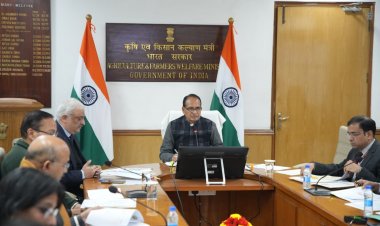
The Ministry of Agriculture and Farmers Welfare recently introduced the Draft Seeds Bill, 2025, aimed at replacing the Seeds Act of 1966 and the Seed (Control) Order of 1983. Recognizing the importance of this bill on the future of Indian agriculture, especially its potential effects on the existing seed regulatory framework, expert consultation involving country’s leading experts on agricultural research and development was considered important.
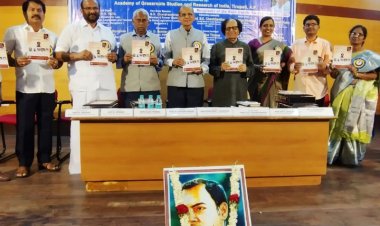
The National Academy of Agricultural Sciences (NAAS) and the Trust for Advancement of Agricultural Sciences (TAAS), both important think tanks for policy advocacy, in collaboration with Indian Society of Genetics and Plant Breeding (ISGPB), Indian Society for Seed Technology (ISST), and Indian Society of Plant Genetic Resources (ISPGR), organized an Expert Consultation on the proposed Seeds Bill, 2025 on 22 November, 2025 at the NASC Complex, Pusa Campus, New Delhi.
The consultation was held under the Co-chairmanship of Dr RS Paroda, Chairman, TAAS and President, ISPGR and Dr Himanshu Pathak, President, NAAS. The deliberation focused on critically reviewing the provisions of the proposed Draft Seeds Bill 2025 regarding its relevance, scope, and potential implications for growth of seed sector and Indian agriculture.
The consultation included representatives from ICAR, NAAS, TAAS, ISGPB, ISPGR, ISST, IARI, private seed companies, seed industry associations, farmers, and other stakeholders. This meeting was followed by further intense discussions among selected experts to draft the final response of the group.
While the bill introduces some important reforms in seed regulation, several portions of the bill requiring refinement to fully protect farmers' interests and ensure scientific rigor were identified.
1. Redefining the 'Farmer' and Protecting Rights
The current draft defines a farmer based on self-cultivation or direct supervision. Experts suggested aligning this definition with that in the Protection of Plant Varieties and Farmers' Rights (PPV&FR) Act to avoid legal ambiguity and ensure that farmers' traditional rights to save, use, and exchange seeds remain sacrosanct. Additionally, the term "Counterfeit Seed" should be explicitly defined to protect proprietary varieties from unauthorized marketing.
2. Governance: Restoring State and Farmer Representation
A significant concern was expressed about the reduced representation of states in the Central Seed Committee (CSC)—down from 22 in the 1966 Act to just 5 in the new draft. To maintain an appropriate balance, it was recommended that every state be represented by a member and that five rotating farmer representatives be included. Furthermore, the Secretary of Agriculture should chair the CSC, with DDGs from ICAR serving as Co-Chairs.
3. "Notification and Listing" Over "Registration"
The bill proposes the term "Registration" for approval of varieties, which involves a risk of being confused with the IP-based variety registration under the PPV&FRA. The present consultation proposes using "Notification and Listing" instead “Registration”. This would maintain the established system of nomenclature while ensuring that all varieties undergo at least two years of multi-location VCU (Value for Cultivation and Use) testing within the ICAR-led network.
4. VCU and DUS Testing
To speed up the delivery of innovation to farmers, the experts suggest:
• Simultaneous Testing: Data for DUS (Distinctness, Uniformity, Stability) under PPV&FRA and VCU under this act should be generated concurrently to fast-track commercialization.
• Accredited R&D: One year’s self-generated data by companies with accredited R&D facilities (Category A) alongside one year of ICAR testing data should be acceptable for notification of new varieties.
• DNA Fingerprinting: In the present era of advanced molecular breeding, DNA fingerprinting should be mandatory for notification of varieties to establish absolute genetic identity. However, selecting appropriate molecular markers and marker combinations would require continuous research support.
5. Addressing "Seed Without Borders"
The provision allowing the recognition of trials conducted outside India—"Seed Without Border"—was not fully acceptable. The consensus was that even if such data is accepted, there must be a mandatory one year of testing in India under similar agro-ecological conditions to ensure suitability for Indian fields.
6. Compensation and Penalties
While the bill outlines penalties for "trivial" or "major" offenses by dealers, it is notably silent on compensating farmers for crop loss caused by poor seed quality. The experts recommend renaming Chapter IX to "Offences, Punishment and Compensation" and establishing clear guidelines for farmer redressal. Additionally, selling registered varieties in non-recommended areas should be elevated from a "trivial" to a "minor/major" offense.
7. Efficient Oversight
The bill must specify higher essential qualifications for Seed Inspectors and Analysts, requiring at least a Bachelor’s degree in Agriculture and a mandatory proficiency test every five years.
Conclusion
The Seeds Bill 2025 is a vital step towards Viksit Bharat-2047. By incorporating the proposed revisions—focusing on state representation, scientific validation, and farmer compensation—the government would create a robust and equitable seed ecosystem that empowers the Indian farmer while also protecting the interest of seed industry sector.
(Padma Bhushan Dr. R. S. Paroda is the Chairman, TAAS and former Director General of ICAR & Secretary, DARE)