
Need to Raise Farmers' Awareness for Agri Exports, with Focus on Productivity and Quality
Achieving the ambitious $100 billion target by 2030 will require policy reforms, value addition, strong infrastructure, and global market access.

 Join the RuralVoice whatsapp group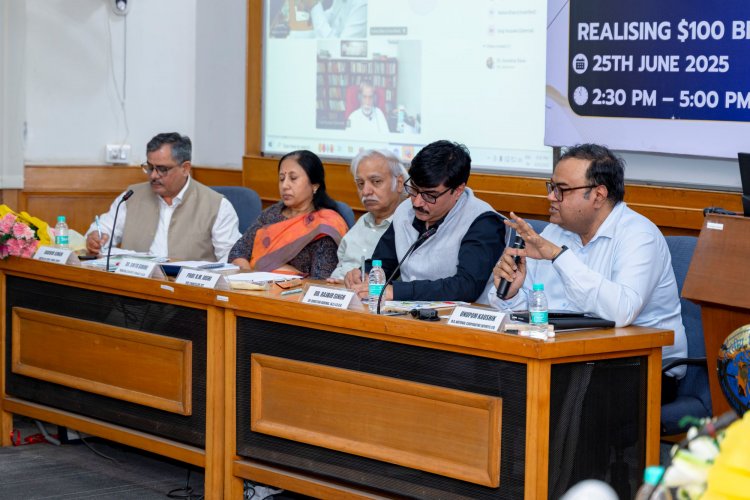
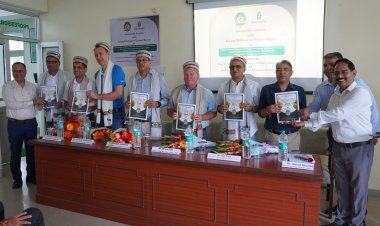
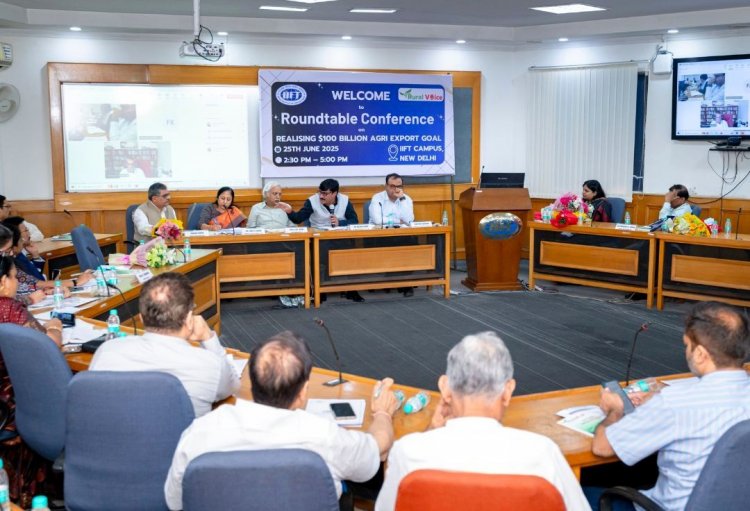
The Indian Institute of Foreign Trade (IIFT), in collaboration with Rural Voice Media, organized a roundtable conference on agricultural exports at the IIFT campus in New Delhi on Wednesday. In the second session of the conference, a discussion took place on “The Way Forward to Realise the $100 Billion Goal.”
Taking part in the panel discussion, former Union Agriculture Secretary Siraj Hussain said, “I have some questions about our agricultural exports. Rice is our major agricultural export, and I am seeing that it will decline in the next 15-20 years. As the groundwater level is depleting fast in the northwestern states of Punjab and Haryana, rice, and particularly non-basmati rice production, has to shift towards the south. In such a situation, if the export of rice, especially non-basmati rice, decreases in the future, what will compensate for rice in exports? For that, we need other agricultural produce. We have some success stories in banana, pomegranate, and grapes, and farmers in Maharashtra have done a good job. They are producing fruits to EU and US MRL standards. There is a better possibility of exporting fresh fruits and vegetables, especially to Central Asia and the Middle East.”
He said that with this, we need infrastructure of the same level to take agricultural exports from $50 billion to $100 billion. This target is not possible with only processed food; some large-volume products will be needed, which can include wheat or some other products.
Unupom Kaushik, Managing Director of National Cooperative Exports Limited, said that first of all, we have to increase agricultural productivity and produce surplus for export. Only then will we be able to increase exports. There are more than 14 crore farmers in the country and more than 141 million hectares of agricultural land, but the yield and income of farmers are very low. China produces three times more agricultural produce on 40 percent less crop area than India. We need to work the most on increasing productivity. But in many places, it is going the opposite way. Our production of cotton has decreased instead of increasing, due to which we have become a net importer of cotton instead of an exporter.
Kaushik believes that if agricultural exports are to reach $100 billion, the value of agricultural production will have to be taken above one trillion dollars. Ensuring the nutritional security of the country is also a big issue. We have to move towards complete nutritional security. With surplus for exports, we have to be competitive in the market; only then can we think of $100 billion in exports.
Addressing the conference, Dr. Rajbir Singh, Deputy Director General (Agricultural Extension) of the Indian Council of Agricultural Research (ICAR), said that along with the agricultural export target of $100 billion, we will also have to think about reducing food imports. Currently, rice has a major share in the agricultural exports of the country. But sustainability is a big question considering the water consumption. We need to prepare a roadmap to face these challenges. Cotton production has fallen by 100 lakh bales in the last ten years. Therefore, there is a need to look at agricultural products separately for export and prepare a roadmap accordingly that is sustainable.
Dr. Singh said that we need to increase the area in the case of pulses and oilseeds. We should consider whether the area of rice should be reduced by 50 lakh hectares to increase production through higher productivity and instead increase the area of pulses and oilseeds. Most farmers in the country do not know about exports. Farmers need to be made aware of exports and good agricultural practices.
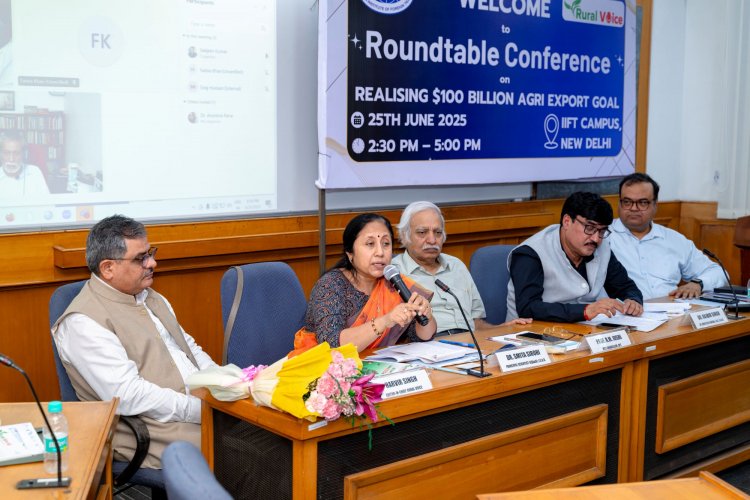
Agricultural economist and Principal Scientist at ICAR, Dr. Smita Sirohi, said that when we talk about the value chain, it starts with good agricultural practices. But farmers do not know about exports. Things like food safety and traceability are neither told to farmers nor are they part of the agricultural education curriculum. Chemicals like chlorpyrifos phosphate are banned in many countries, but in India, its use is allowed for some crops. Due to this, India's export consignments have been rejected. This harms exports. We have to understand that trade is not possible without traceability. We have more than 700 Krishi Vigyan Kendras, through which we can make farmers skilled in good agricultural practices. We can give them information about what is banned and what is not. Food safety, food standards, and increasing the shelf life of the produce—all these should be a part of agricultural education.
Dr. Sirohi believes that taking agricultural exports to $100 billion is an ambitious goal. But it is possible. For that, there is a need for better coordination and a roadmap. There is a need for better coordination between the Ministry of Agriculture, the Ministry of Food, and the Ministry of Commerce. For agricultural exports, we need to create a dedicated cell that has members from all the concerned departments and experts. Organic certification is a big issue. The EU had banned five organic certification agencies from the country. Regarding trade agreements, Dr. Sirohi believes that it is all about give and take. It is not possible that we will only export and will not import. In trade agreements, both sides want their own benefit; we should accept this fact.
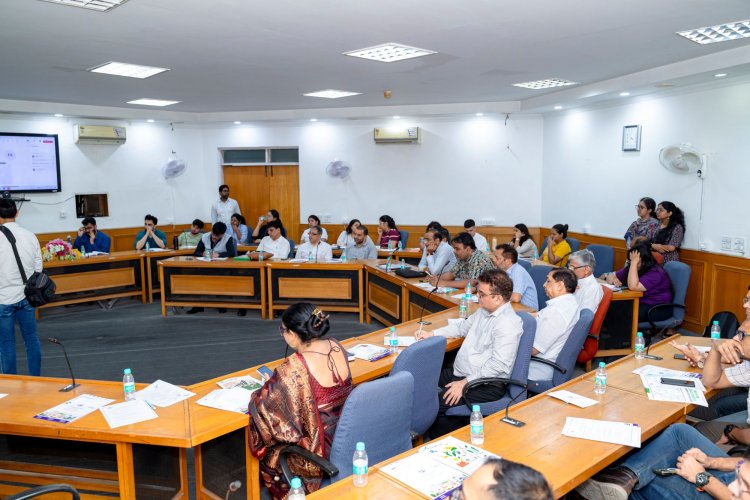
While concluding the conference, IIFT VC Prof. Rakesh Mohan Joshi said that in the case of agricultural products, other countries are using market intelligence and promotion to increase the consumption of their products in our market. America's almonds, pistachios, walnuts, and Washington apples are examples of this. The California Walnut Commission and Washington Apple Commission keep trying to get their products a place in the Indian market. We also need to make similar efforts for our products outside the country. The conference was moderated by IIFT Assistant Professor Dr. Arunima Rana.
Rural Voice's Chief Editor Harvir Singh thanked IIFT, all the panellists, agricultural scientists, industry, and farmer representatives for a meaningful dialogue on an important issue like agricultural exports. IIFT Department Head Dr. Pooja Lakhanpal and colleagues were present on this occasion.