

US, Iran Sign 14-Point Ceasefire Agreement, Launch 60-Day Peace Process
The United States and Iran have formally signed a 14-point ceasefire agreement, launching a 60-day negotiation process aimed at ending months of conflict, reopening the Strait of Hormuz, and paving the way for a broader peace settlement.

 Join the RuralVoice whatsapp group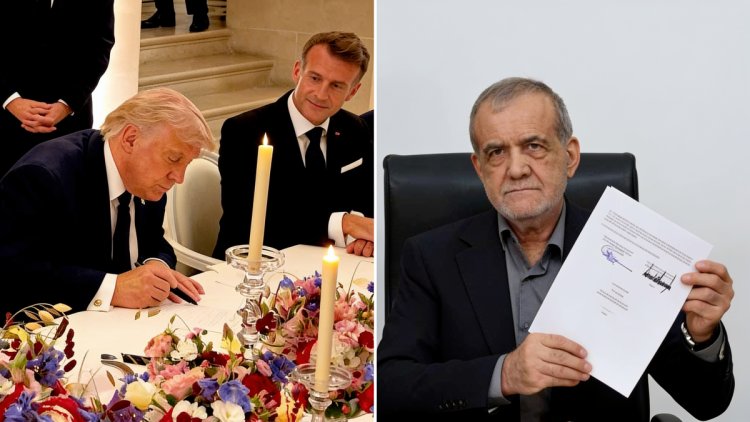
The United States and Iran have formally signed a landmark ceasefire agreement aimed at ending months of conflict and paving the way for a broader peace settlement in the Middle East.
U.S. President Donald Trump signed the 14-point Memorandum of Understanding (MoU) just before attending a grand state dinner hosted by French President Emmanuel Macron at the Palace of Versailles. The historic venue was chosen for its symbolism, as the Treaty of Versailles that formally ended World War I was signed there in 1919.
On the Iranian side, Iranian President Masoud Pezeshkian formally signed the memorandum on June 17, while Parliament Speaker and chief negotiator Mohammad Baqer Qalibaf had digitally signed the agreement earlier as part of the negotiation process. Iranian officials described the agreement as a significant step toward ending the conflict, restoring economic stability and opening a new chapter in relations with the international community.
Leaders attending the G7 summit welcomed the breakthrough, describing it as a major diplomatic achievement that could reduce tensions in the Middle East and help stabilize global energy markets.
According to the memorandum, the agreement calls for an immediate end to military operations on all fronts, including in Lebanon. It also provides for the full resumption of maritime traffic through the Strait of Hormuz without additional charges, ensuring the uninterrupted movement of global energy supplies and commercial shipping.
The United States has agreed to lift its blockade of Iranian ports, waive sanctions imposed on Iran and unfreeze Iranian assets held abroad. The deal also establishes a $300 billion international investment fund to support Iran's post-war reconstruction and economic recovery.
Iran, in turn, has committed to restoring maritime traffic in the Gulf and Gulf of Oman and reiterated that it does not seek to develop nuclear weapons. Iranian officials said the agreement would help rebuild the country's economy after the conflict and attract international investment for infrastructure and reconstruction projects.
President Pezeshkian said the agreement presents an opportunity to secure peace while protecting Iran's national interests. He emphasized that the success of the process would depend on both sides fully implementing their commitments during the upcoming negotiations.
The memorandum launches a 60-day peace process during which negotiators will work toward a comprehensive settlement covering regional security, economic cooperation, sanctions relief and mechanisms to prevent future conflicts. Several contentious issues, including long-term security guarantees and verification arrangements, are expected to be addressed during this phase.
Financial markets reacted positively to the announcement. Global oil prices declined after investors welcomed the prospect of reduced geopolitical risks and the normalization of energy exports through the Strait of Hormuz, one of the world's most important oil shipping routes.
Despite the breakthrough, analysts cautioned that significant challenges remain. The durability of the agreement will depend on implementation by both sides and continued international support for the peace process.
If successfully implemented, the accord could represent the most significant diplomatic rapprochement between the United States and Iran in decades and reshape the geopolitical landscape of the Middle East.