
Rural Demand Remains Strong; Sharp Slowdown Unlikely Despite Monsoon and Food Price Risks: UBS
India’s rural demand remains resilient, with stronger farm incomes, government transfers, credit growth and improved household balance sheets supporting consumption, UBS said. Better monsoon activity has revived kharif sowing, but El Niño and rising food prices pose risks. Rural demand is expected to moderate, though a sharp FY27 slowdown appears unlikely.

 Join the RuralVoice whatsapp group
India’s rural economy has retained its momentum in the first half of FY2026-27, outperforming urban activity, but the pace of growth could moderate amid weather uncertainties and rising food prices, according to UBS India Economic Perspectives.
The UBS India Rural Economic Indicator (REI) shows that rural economic momentum strengthened during the June quarter and continued to outperform urban activity from early 2026. The report attributes the resilience primarily to four factors—farm income, wage income, government transfers and access to credit.
The recovery in rural demand appears broad-based, with positive signals emerging from consumer staples, discretionary consumption and agriculture-linked sectors. Companies across various sectors have also raised their FY27 volume growth guidance, citing stronger rural demand.
UBS said improved farm cash flows following two relatively good monsoon years, government welfare transfers, GST-related benefits and strong credit growth have strengthened rural household purchasing power. These factors have helped sustain consumption despite concerns over the evolving El Niño conditions.
Monsoon recovery supports kharif sowing
The report noted that monsoon activity, which was exceptionally weak in June, improved significantly in July and remained supportive through early August. This has reduced some concerns over agricultural production.
The improvement in rainfall has also helped revive kharif sowing. The year-on-year decline in total acreage narrowed sharply from around 21% in early July to less than 2% by the first week of August.
However, UBS cautioned that strengthening El Niño conditions could affect rainfall distribution during the remainder of the season. A positive Indian Ocean Dipole (IOD) could partly offset the impact. Reservoir levels, meanwhile, remain close to normal.
Policy measures aimed at promoting crop diversification, short-duration and climate-resilient crop varieties, along with greater irrigation coverage, could further reduce the impact of rainfall uncertainty on farm incomes.
Rural balance sheets stronger
Rural households are entering FY27 with stronger balance sheets after two relatively good crop years. Improved savings and farm cash flows could provide a cushion against potential economic shocks.
Government support is another important factor. Large cash-transfer programmes implemented by several states, estimated at around $20 billion, continued welfare spending and public investment in rural infrastructure are expected to support rural incomes and consumption.
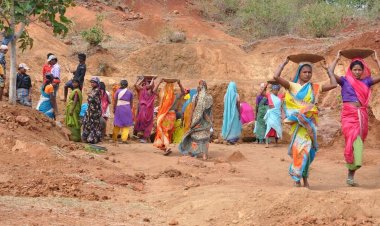
The newly introduced VB-GRAM-G rural employment scheme, which came into effect on July 1 replacing MGNREGA, could provide an additional income buffer. However, UBS said it is too early to assess its macroeconomic impact as the scheme has been operational for only a few weeks.
Food inflation remains a concern
Despite the positive outlook, UBS does not expect the current pace of rural demand growth to continue unchanged through FY27. Uneven monsoon activity could affect agricultural output and farm incomes, while higher food prices could gradually erode rural households’ real purchasing power.
Nevertheless, the report said a sharp slowdown in rural demand appears unlikely. Strong household balance sheets, government spending, welfare transfers and favourable credit conditions are expected to cushion rural incomes.
UBS expects rural demand to remain more resilient than during previous episodes of monsoon-related stress, although growth is likely to moderate from current levels.