
India Proposes Rules to Allow Higher Ethanol-Blended Fuels, Paving Way for Flex-Fuel Vehicles
India has proposed amendments to the Central Motor Vehicles Rules to allow higher ethanol-blended fuels, including E85 and E100, paving the way for flex-fuel vehicles. The move aims to utilize surplus ethanol capacity, cut crude oil imports, and promote cleaner transport fuels.

 Join the RuralVoice whatsapp group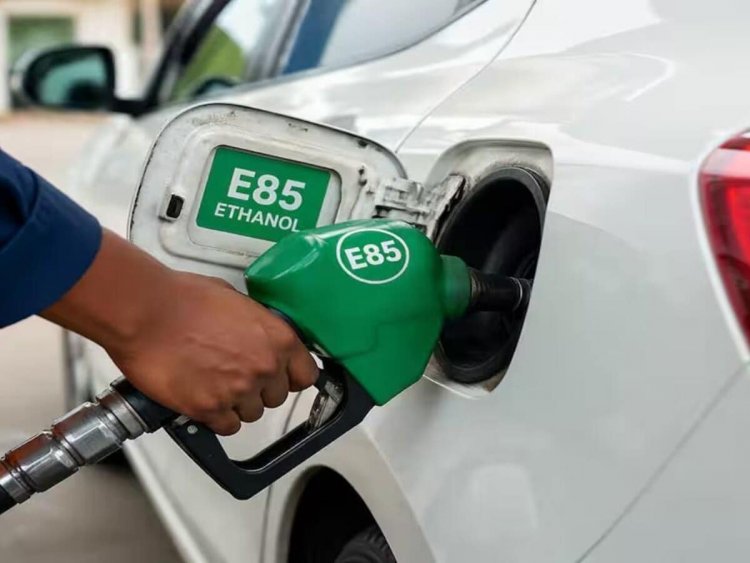
The Government of India has proposed sweeping changes to vehicle emission norms to enable the use of higher ethanol-blended fuels, including up to 100 per cent ethanol, in a major push towards cleaner mobility and reduced crude oil imports.
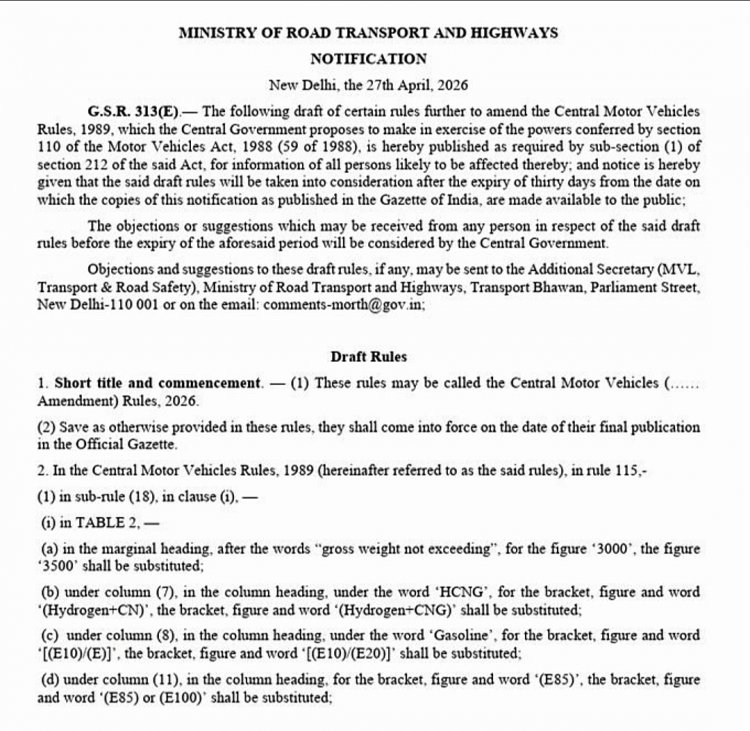
In a draft notification issued on April 27, the Ministry of Road Transport and Highways (MoRTH) proposed amendments to the Central Motor Vehicles Rules, 1989 to expand the scope for alternative fuels such as E85, E100, B100 biodiesel, and hydrogen-CNG blends. The changes would be taken up after a 30-day public consultation period.
The draft rules aim to formally incorporate fuels like E85 (85 per cent ethanol blended with petrol) and E100, allowing vehicles to run on nearly pure ethanol. The proposal also seeks to replace existing references to lower biodiesel blends such as B10 with B100, indicating readiness for full-scale adoption of bio-based fuels.
A Major Push For Ethanol
The move comes after India achieved its target of 20 per cent ethanol blending (E20) in petrol in 2025, under its Ethanol Blended Petrol (EBP) programme. The government is now looking to deepen ethanol adoption to reduce dependence on imported fossil fuels and lower carbon emissions.
Officials said the amendments will facilitate the introduction of flex-fuel vehicles, which can operate on varying blends of ethanol and petrol. Such vehicles are seen as a critical step in diversifying India’s fuel mix.
Globally, flex-fuel technology has seen significant success in countries like Brazil, where over 90 per cent of new vehicles are capable of running on ethanol, petrol, or a mix of both.
Surplus Ethanol Capacity
India’s ethanol production capacity has expanded rapidly in recent years. As of March 2026, the India has production capacity of nearly 20 billion litres of ethanol, compared to an estimated demand of around 11 billion litres under the current E20 blending mandate. The surplus capacity has prompted policymakers to explore higher blending ratios and alternative applications.
Industry experts say enabling E100 could help absorb excess supply while supporting farmers through increased demand for feedstocks such as sugarcane, maize, and surplus grains.
Public Consultation Underway
The draft notification has been opened for public comments, following which the government will take a final decision. If approved, the amendments are expected to accelerate India’s transition towards cleaner fuels and strengthen its long-term energy security strategy.
Launched in 2003, the EBP programme initially saw slow progress but gained momentum after 2014 due to policy incentives, improved pricing mechanisms, and diversification of raw materials. India reached 10 per cent blending in 2022 before achieving the 20 per cent milestone in 2025.
With the proposed regulatory changes, India is now positioning ethanol as a key pillar of its transport energy mix, alongside electric mobility and other alternative fuels.