
New High-Oleic Groundnut Varieties Identified to Improve Farmer Returns and Support India's Edible Oil Goals
ICAR's AICRP-G has identified two new high-oleic groundnut varieties, ICGV 201214 and ICGV 181030, for national release. Offering higher yields, improved oil quality and premium market value, the varieties are expected to increase farmer incomes, expand cultivation in eastern and northeastern India, and strengthen the country's edible oil sector.

 Join the RuralVoice whatsapp group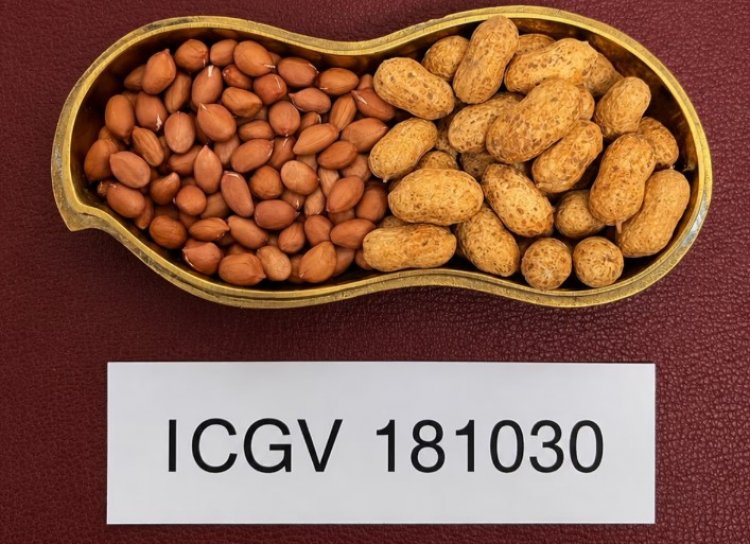
Indian farmers may soon have access to two new high-oleic groundnut varieties that promise higher yields, better oil quality and improved market returns. The varieties, identified by the Variety Identification Committee (VIC) of the All India Coordinated Research Project on Groundnut (AICRP-G) under ICAR, are expected to strengthen India's edible oil sector while supporting efforts to reduce dependence on imported edible oils.
The two varieties, ICGV 201214 and ICGV 181030, were identified for national release during the AICRP-G Annual Group Meeting held in Pune from April 21 to 23, 2026. They were developed through collaborations involving the International Crops Research Institute for the Semi-Arid Tropics (ICRISAT), the University of Agricultural Sciences (UAS), Dharwad, and Junagadh Agricultural University.
ICGV 181030 is the first high-oleic groundnut variety recommended for cultivation in Odisha and the Northeastern States. The medium-duration Spanish bunch variety is also suitable for Gujarat, Rajasthan, Maharashtra, Jharkhand and West Bengal during the Kharif season. According to ICRISAT, the variety contains about 78% oleic acid and recorded a 7% higher pod yield than the zonal check variety Girnar 3 in Zone IV and a 12% yield advantage over TG 37A in Zone II during multi-year trials.
The second variety, ICGV 201214, is recommended for Gujarat and Rajasthan. It contains 81% oleic acid, 53% oil and 27% protein, while producing bold kernels preferred by the market. Over three years of testing, it achieved a 19% higher kernel yield than the widely cultivated JL 501 and consistently recorded higher oil content than existing check varieties.
High-oleic groundnuts produce oil with improved shelf life, greater oxidative stability and enhanced nutritional value, making them attractive to food processors and health-conscious consumers. Researchers say the new varieties can help farmers earn premium prices while supporting the expansion of groundnut cultivation under the National Mission on Edible Oils-Oilseeds (NMEO-Oilseeds).