Can E-commerce Solve the Problem of Input Quality in Indian Agriculture?
Poor-quality seeds, fertilisers and pesticides continue to undermine Indian agriculture, causing yield losses and financial stress for farmers. Agri e-commerce platforms are emerging as a credible alternative by improving transparency, traceability and access to verified inputs. While not a complete solution, digital platforms reduce counterfeit risks, strengthen accountability and, with policy support, can significantly improve input quality and farm sustainability.

 Join the RuralVoice whatsapp group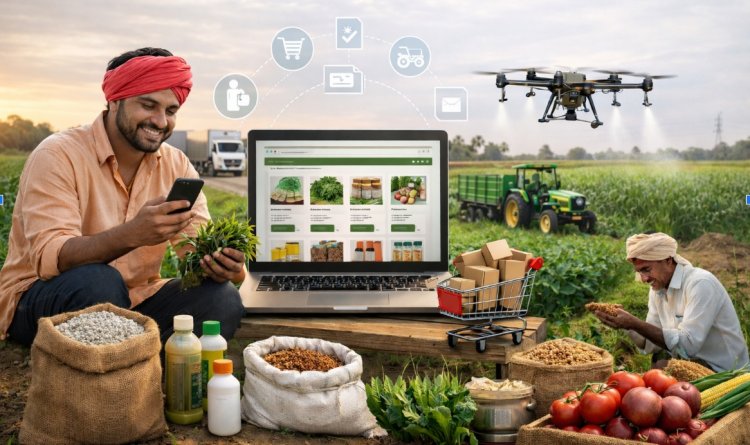
One enduring problem has plagued Indian farmers for decades: subpar agricultural inputs. Duplicate pesticides, tainted fertilisers, and fake seeds continue to harm crops, waste money, and undermine farmers' faith. E-commerce has become a powerful substitute for the conventional input supply chain in agriculture in recent years. It is undoubtedly altering farmers' access to dependable products, even though it is not a perfect option.
E-commerce in Indian Agriculture
In the agricultural industry, e-commerce refers to online platforms that enable farmers to purchase machinery, seeds, fertiliser, pesticides, and other farm inputs directly via websites or mobile applications. These platforms reduce reliance on regional vendors and intermediaries, who often sell goods without proper labelling or authenticity checks.
Nowadays, many farmers purchase inputs delivered directly to their communities, verify product information, and compare prices on their cellphones. Research on digital agriculture adoption shows that increased smartphone access enables farmers to procure inputs, access advisory services, and compare prices remotely, reducing dependence on local intermediaries. Studies by the OECD on agricultural innovation and productivity highlight that digital tools integrated with input delivery and advisory services improve sustainability and on-farm decision-making. This transition is gradually making farm input sourcing in India more data-driven and organised.
How Poor Input Quality Affects Farmers
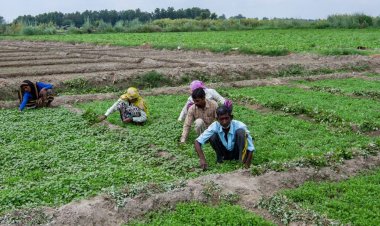
Subpar inputs directly impact crop nutrients. Yield losses and recurring spray expenses are caused by non-germinating seeds, low-nutrient fertilisers, and insecticides diluted with inactive chemicals. In many cases, crops initially appear normal, which gives farmers a false sense of security. The real damage becomes visible only after critical growth stages are missed, leaving little scope for correction and forcing farmers to invest again in fresh inputs.
Beyond yield loss, inadequate inputs significantly increase financial stress. Farmers often take seasonal loans expecting stable output, but crop failure pushes them into repeated borrowing. Additional spending on re-spraying, re-sowing, and labour further inflates costs without guaranteeing recovery. Over time, the repeated use of inferior chemicals and fertilisers weakens soil structure, reduces nutrient availability, and makes crops more vulnerable to pests and stress conditions, lowering long-term productivity.
Small and marginal farmers are the most affected by this cycle. With limited land, capital, and access to expert advice, they have little room to experiment or absorb losses. A single failed season can disrupt household income, delay repayments, and reduce confidence in farming decisions, making the impact of poor input quality far more severe for them than for larger producers.
Why Input Quality Problems Persist
The supply chain for traditional agricultural inputs is highly dispersed. Before products reach farmers in many rural areas, they pass through several layers. Making quality monitoring challenging. The flow of counterfeit goods is enabled by lax policing and insufficient testing.
Another factor is a little awareness. Instead of verifying labels, batch numbers, or certificates, many farmers rely on dealer advice or price-based judgements. Because poor-quality seeds and inputs fail under stressful circumstances, climate uncertainty exacerbates the issue.
Role of E-commerce Platforms
Agri-ecommerce platforms aim to address these gaps by sourcing inputs directly from manufacturers or authorized distributors. These platforms emphasize product authenticity and traceability by using verified agri supplier onboarding, centralized warehousing, and batch-level product identification, a model increasingly adopted by trusted online platforms for farm inputs to reduce the circulation of spurious inputs.
The majority of platforms provide clear product information, keep accurate invoices and GST billing, and check suppliers before listing products. If farmers receive faulty or inaccurate goods, several also offer simple return or replacement options. By connecting advice services, some platforms go one step further and assist farmers in selecting inputs appropriate for their crop, area, and time of year.
How E-commerce Helps Improve Input Quality
Online platforms create accountability. Fake inputs are more difficult to survive when products are presented with complete data, batch numbers, and user feedback. Farmers can avoid making blind purchases by checking brands and reading customer reviews.
By eliminating handling steps, direct sourcing reduces the risk of adulteration. Additionally, tracking complaints and taking action against untrustworthy providers is made simpler by digital records. This gradually fosters confidence and elevates merchants who prioritise quality.
Key ways e-commerce improves input quality include:
- Displaying batch numbers and product details, enabling verification before purchase.
- Allowing farmers to compare brands and prices reduces dependence on local monopolies.
- Capturing user reviews and feedback, exposing low-quality products quickly
Reducing physical handling and lowering the risk of adulteration. - Maintaining digital transaction records, simplifying complaint tracking, and enforcing.
- Filtering out unreliable sellers and elevating merchants who consistently supply high-quality inputs.
These systems reward providers who put quality first and progressively increase trust in digital input markets.
Benefits for Farmers
The most immediate benefit for farmers is access to genuine inputs at transparent prices. With fewer intermediaries, costs are often lower or at least more predictable. Timely delivery helps farmers plan sowing and spraying without delays.
Equally important is confidence. When farmers trust the quality of inputs, they are more willing to invest appropriately in their crops. Advisory support through apps or call centres further improves decision-making and reduces product misuse.
Government’s Role in Strengthening Agri E-commerce
Government support plays a significant role in scaling agri e-commerce. Research on digital agriculture adoption shows that rural internet connectivity, digital payment systems, and farmer training programs are essential for broader adoption and institutional trust (World Bank, Digital Development and Agriculture Research). Linking subsidies and schemes to verified platforms can also discourage the circulation of fake inputs. Collaboration between government institutions, Farmer Producer Organisations, and e-commerce platforms can help deliver quality inputs to even the most remote regions.
Challenges That Still Exist
Wider adoption is also hampered by operational and policy limitations in addition to infrastructure and trust. Farmers are reluctant to use online platforms again after a negative experience because return and grievance redressal mechanisms are sometimes slow or ambiguous. The perceived value of digital platforms is diminished by the scarcity of regionally relevant content, such as seasonal suggestions, dose guidelines, and crop advice appropriate to a given location.
Last-mile distribution often relies on external logistics that are out of step with agricultural urgency, leading to delays during crucial windows for spraying or sowing. The use of e-commerce in agriculture will continue to increase unevenly rather than uniformly until these structural difficulties are resolved by improved coordination between platforms, local institutions, and extension.
The Way Forward
E-commerce alone cannot eliminate input quality problems, but it significantly reduces them. By improving transparency, traceability, and access to verified products, it offers farmers a safer alternative to traditional markets.
With better infrastructure, training, and policy support, agri e-commerce can play a long-term role in protecting farmers from poor-quality inputs and making Indian agriculture more reliable and sustainable.
(Sanjeev Reddy is Chief Agronomy Officer at online agri marketplace AgriBegri)