India achieves breakthrough in indigenous cattle breeding with large-scale embryo transfer programme
India achieves a major livestock milestone as BL Agro’s Leads Genetics completes the first large-scale embryo transfer in indigenous cows. Using advanced IVF technology and Brazilian expertise, the programme aims to triple milk productivity and enhance Gir and Sahiwal genetics.

 Join the RuralVoice whatsapp group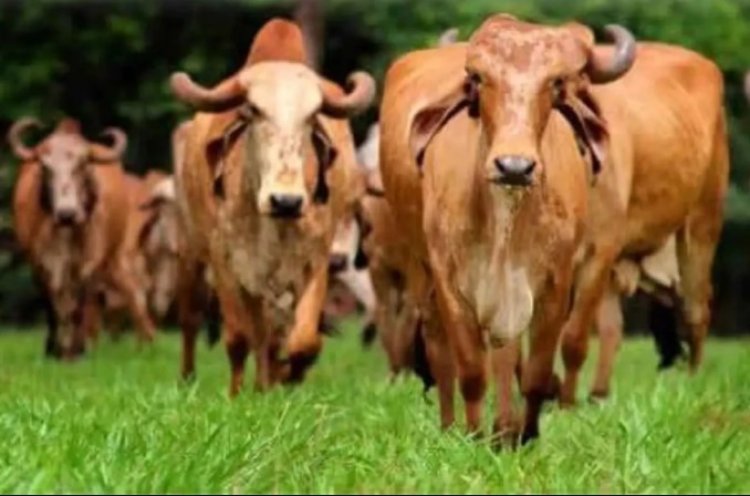
In a significant step for India’s dairy and livestock sector, Leads Genetics, a subsidiary of BL Agro Group, has successfully carried out what it described as the country’s first large-scale indigenous cow embryo transfer programme in Bareilly.
The initiative, centred at a newly established Centre of Excellence for Cattle Breeding and Dairying Technology, marks a notable advancement in the use of reproductive technologies to improve India’s cattle genetics and milk productivity.
In the first phase conducted in December 2025, the company performed in-vitro fertilisation (IVF) on 116 cows, achieving a success rate of around 70%, a level industry observers say is significant at such scale. Building on this, a second phase expanded embryo transfer procedures to 160 cows, including indigenous breeds such as Gir cattle and Sahiwal cattle, along with Holstein Friesian (HF) crossbreeds.
The programme is being implemented at a facility equipped with advanced IVF, genomics and pathology laboratories, reflecting a broader push towards scientific livestock management. It also operates under a tripartite collaboration involving Brazil’s Embrapa and Fazenda Floresta- marking Embrapa’s first partnership with a private Indian entity.
Industry experts note that embryo transfer technology enables rapid multiplication of high genetic merit cattle, potentially increasing milk productivity per animal significantly. Company officials indicated that the technology could enhance milk production capacity by up to three times over conventional breeding approaches, though outcomes would depend on farm-level adoption and ecosystem support.
“The scale of this success is a defining moment for Indian dairy,” said Ashish Khandelwal, Managing Director of BL Agro, adding that advanced reproductive technologies could accelerate India’s ambition to improve per-cow productivity and strengthen its livestock genetics base.
The collaboration also highlights deepening agricultural ties between India and Brazil, particularly in the field of cattle genetics, where Brazilian expertise in tropical breeds has long been recognised.
With India already the world’s largest milk producer but still lagging in per-animal yield, such interventions are increasingly being seen as critical to improving farmer incomes and sustaining rural livelihoods. If scaled effectively, initiatives like this could play a key role in modernising the country’s dairy value chain while preserving and enhancing indigenous breeds.
The programme’s next phases are expected to focus on wider deployment and farmer integration, potentially shaping a new template for technology-driven livestock development in India.