
ICAR-IVRI Achieves Breakthrough in Producing Sahiwal Calves Using Advanced Reproductive Technology
The Indian Veterinary Research Institute (ICAR-IVRI) has successfully produced Sahiwal calves using advanced OPU-IVF-ET technology for the first time. The breakthrough enables rapid genetic improvement of indigenous cattle breeds, enhances productivity, and supports conservation efforts, marking a major step forward in India’s livestock research and assisted reproductive technologies.

 Join the RuralVoice whatsapp group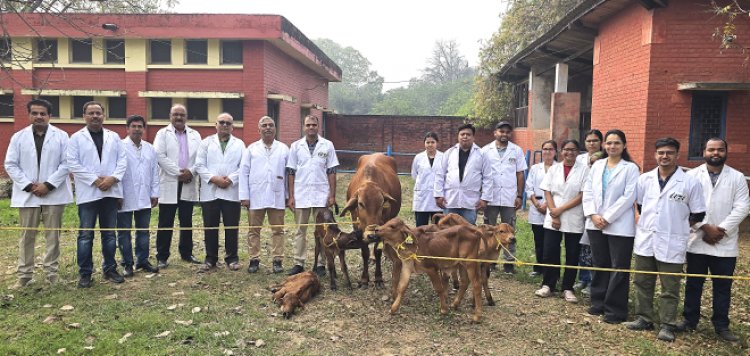
In a major advancement for India’s livestock sector, Indian Veterinary Research Institute (ICAR-IVRI) has successfully produced indigenous Sahiwal calves using advanced Assisted Reproductive Technologies (ART). This marks the institute’s first-ever success using ultrasound-guided ovum pick-up, in vitro fertilization and embryo transfer (OPU-IVF-ET), paving the way for faster genetic improvement of indigenous cattle breeds.
The breakthrough is the result of a focused programme launched by ICAR-IVRI during 2022-23 to enhance the genetic potential of India’s key dairy breeds, including Sahiwal, Tharparkar and Murrah buffalo. Scientists worked to standardize OPU-IVF-ET protocols under both farm and field conditions.
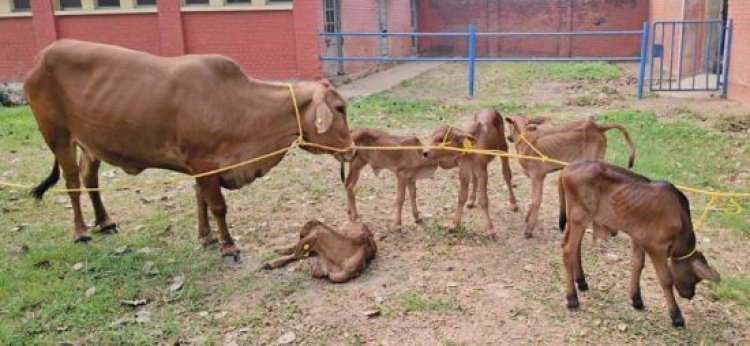
Their efforts culminated in a significant achievement when five healthy Sahiwal calves were born within a span of five days starting February 28, 2026, using the OPU-IVF-ET technique. The calves were developed from superior germplasm, with oocytes sourced from a high-yielding Sahiwal cow producing over 12 litres of milk per day. The fertilization process used semen from a proven bull with a strong maternal lineage, having an approximate lactation yield of 3,320 kg.
Researchers reported notable technical success in oocyte recovery even under non-stimulated conditions. The average oocyte retrieval rates stood at around 14.5 in Tharparkar cattle, 13.14 in Sahiwal cattle and 4.5-5.5 in Murrah buffalo. Embryo development efficiency was also high, with blastocyst production rates exceeding 47% in cattle and over 42% in buffalo—levels comparable to leading global laboratories.
Officials said the achievement is not a one-time success but a scalable model for future livestock development. The institute plans to expand the use of OPU-IVF-ET technology to accelerate the production of elite indigenous cattle and buffalo, thereby strengthening genetic improvement programmes and conserving valuable native germplasm.
Commending the achievement, Raghavendra Bhatta, Deputy Director General (Animal Science), ICAR and Director of ICAR-IVRI, said the breakthrough would open new possibilities in assisted reproductive technologies and help drive further innovations in the livestock sector.
The success underscores the role of scientific innovation in boosting productivity, conserving indigenous breeds and supporting a sustainable and self-reliant agricultural economy.
In addition, ICAR-IVRI is focusing on capacity building by conducting hands-on training programmes in advanced reproductive technologies. These initiatives aim to develop skilled professionals, promote entrepreneurship and support start-ups in the livestock sector.
The research was carried out by a team led by Dr Brijesh Kumar, in collaboration with experts across divisions and supported by research scholars. The programme was guided by Dr S. K. Singh.