
Amid Hormuz Stalemate Brent Crude Surges Past $111; Demand Destruction Fears Rise
Global oil markets remain under pressure as Brent crude crossed $111 per barrel amid the prolonged Strait of Hormuz blockade and stalled U.S.-Iran talks. Analysts warn of permanent demand destruction, while China may restart fuel exports to ease tight Asian fuel supplies and rising price pressures.

 Join the RuralVoice whatsapp group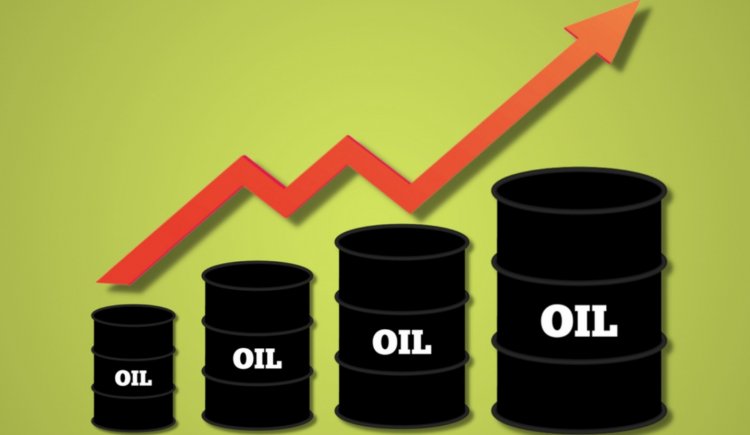
Global oil markets remain under severe strain as Brent crude climbed above $111 per barrel on Tuesday, driven by the prolonged closure of the Strait of Hormuz and growing concerns over long-term oil demand destruction across major economies. At the same time, China is considering restarting fuel exports to stabilize domestic stockpiles and help ease tightening fuel supplies across Asia.
Brent crude futures rose 3.4% to $111.9 per barrel (5.30 pm IST), while U.S. benchmark West Texas Intermediate (WTI) climbed 4.7% to $100.9 per barrel. The rally reflects market concerns over the continued blockade of the Strait of Hormuz, which previously handled nearly 20% of global daily oil and LNG flows.
The disruption has now entered its ninth week, far exceeding analysts’ early expectations that the route would reopen by April. The absence of progress in U.S.-Iran negotiations has worsened sentiment. U.S. President Donald Trump has indicated that talks will not resume unless Iran abandons all nuclear ambitions, reducing hopes of any immediate resolution.
As a result, major financial institutions have revised their oil price forecasts upward. ING raised its second-quarter Brent forecast to an average of $104 per barrel from $96 earlier, while projecting fourth-quarter prices at $92 per barrel. Goldman Sachs also lifted its forecast, expecting Brent to average $90 per barrel in the final quarter of 2026 and WTI at $83.
Permanent loss of Demand
Meanwhile, warnings are increasing about permanent oil demand destruction caused by the supply shock. The International Energy Agency (IEA) estimates that global markets have already lost around 13 million barrels per day of oil supply, calling it the biggest energy security threat in history. Analysts suggest up to 1 billion barrels of lost supply are now “almost guaranteed.”
High fuel prices are already forcing countries to alter their energy strategies. Japan, South Korea, China, Bangladesh, and Southeast Asian nations are increasing coal use as LNG becomes scarce and expensive. Many governments are also accelerating investments in renewables, nuclear power, and electrified transport to reduce oil dependence.
However, analysts warn that rising crude prices also push up petrochemical costs, making electric vehicles, solar panels, and wind energy infrastructure more expensive. Some experts believe oil may need to reach $200-$250 per barrel before large-scale demand destruction fully materializes.
China May Resume Fuel Exports
In this backdrop, China may restart gasoline and diesel exports next month after domestic fuel stockpiles surged due to weak demand and earlier export restrictions. State refiners like Sinopec and CNPC have applied for export permits. With diesel supplies tightening globally, China’s move could offer some relief to Asian fuel markets, though the broader energy crisis remains far from resolved.