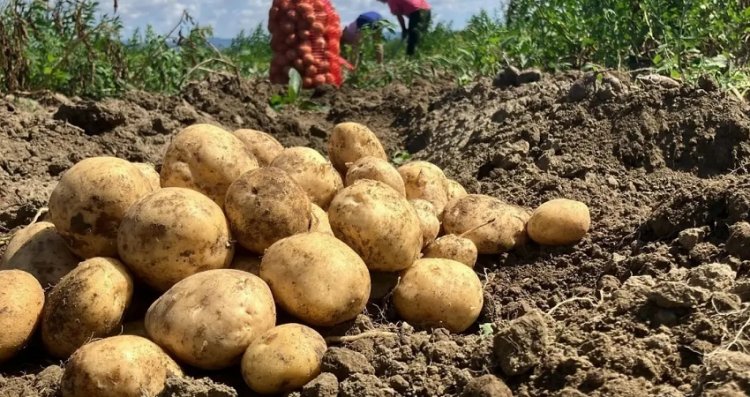
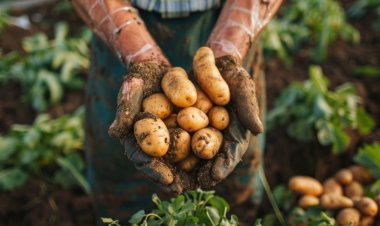
Potato farmers in Uttar Pradesh are grappling with severe financial distress this season as falling market prices continue to erode their returns. Despite long-standing demands for relief since the harvesting began in February, the Centre has only recently approved a procurement proposal under the Market Intervention Scheme (MIS), raising fresh concerns among growers.
Under the approved plan, the government will procure 2 million tonnes of potatoes at Rs 6,500 per tonne, equivalent to Rs 6.5 per kilogram. However, instead of stabilizing the market, the announcement appears to have further depressed mandi prices. Traders across the state have reportedly lowered their purchase rates to around Rs 600–700 per quintal, a drop of Rs 50–100 per quintal following the government’s price declaration of Rs 650 per quintal.
Farmers say the timing of the intervention has compounded their losses. Dungar Singh Khandoli, a prominent potato farmer and cold storage operator from Agra district, noted that prices had already collapsed during the harvesting phase due to a lack of buyers, with rates plunging to as low as Rs 200–500 per quintal. He argued that an earlier procurement announcement could have prevented the steep decline.
According to Singh, mandi prices had recovered slightly to Rs 600–800 per quintal before the procurement rate was declared. “The government’s announcement has pushed prices down again instead of offering relief,” he said, adding that this has been the worst year for potato farmers in the past four years.
Most of the produce has already been moved into cold storage facilities, increasing the financial burden on farmers. Storage costs alone amount to around Rs 250 per quintal, with additional expenses of Rs 65–70 per quintal for packaging and Rs 25–30 per quintal for transportation. With total production costs estimated at Rs 1,000–1,200 per quintal, the procurement price of Rs 650 per quintal falls far short of covering expenses.
There are also doubts about the feasibility of procurement, as the bulk of the crop is already stored. On-ground preparations for procurement remain unclear, raising fears that the announcement may not translate into effective action.
Farmer Groups Raise Objections
Farmer organizations have strongly opposed the procurement price, calling it inadequate. Bharatiya Kisan Union national spokesperson Rakesh Tikait said that the government’s claim of supporting farmers is misleading. “At Rs 6.5 per kg, farmers cannot even recover their costs,” he stated, citing rising input expenses such as seeds, fertilizers, irrigation, and labor. He has demanded that procurement prices be fixed at Rs 10–12 per kg and had written to Prime Minister Narendra Modi earlier in March regarding the issue.
Why Prices Have Fallen
The sharp decline in potato prices is largely attributed to bumper production across multiple states, including West Bengal, Gujarat, and Karnataka. West Bengal, the second-largest potato producer after Uttar Pradesh, is also witnessing prices around Rs 500 per quintal.
Last year, farmers received Rs 1,000–1,500 per quintal, but this season prices dropped sharply to Rs 200–500 per quintal at the start of harvesting. Currently, more than 10 million tonnes of potatoes are stored in cold storage facilities in UP, while ample market supply continues to exert downward pressure on prices.
High-yielding but low shelf-life varieties such as Kufri Khyati, Kufri Mohan, and Kufri Gaurav are selling at Rs 500–700 per quintal. Meanwhile, varieties like Kufri Bahar, Chipsona, and Lalima are fetching slightly better prices of Rs 700–800 per quintal.
Traditionally, Uttar Pradesh supplied potatoes to southern markets, but increased production in Karnataka has reduced demand. At present, most of the state’s produce is being transported to markets in Maharashtra, Madhya Pradesh, and Chhattisgarh.
As uncertainty looms over procurement implementation and prices remain below cost levels, farmers fear prolonged financial strain unless corrective measures are taken swiftly.


 Join the RuralVoice whatsapp group