Nagauri Paan Methi Secures Community Variety Registration under the Protection of Plant Varieties and Farmers’ Rights Authority
In a major recognition of farmers’ intellectual property rights, the Protection of Plant Varieties and Farmers’ Rights Authority (PPVFRA) has registered Nagauri Paan Methi as a Community Farmers’ Variety. The registration grants legal rights to the farming community of Nagaur district in Rajasthan, protecting the crop from biopiracy and paving the way for benefit sharing, export opportunities, and a future Geographical Indication (GI) tag.
 Join the RuralVoice whatsapp group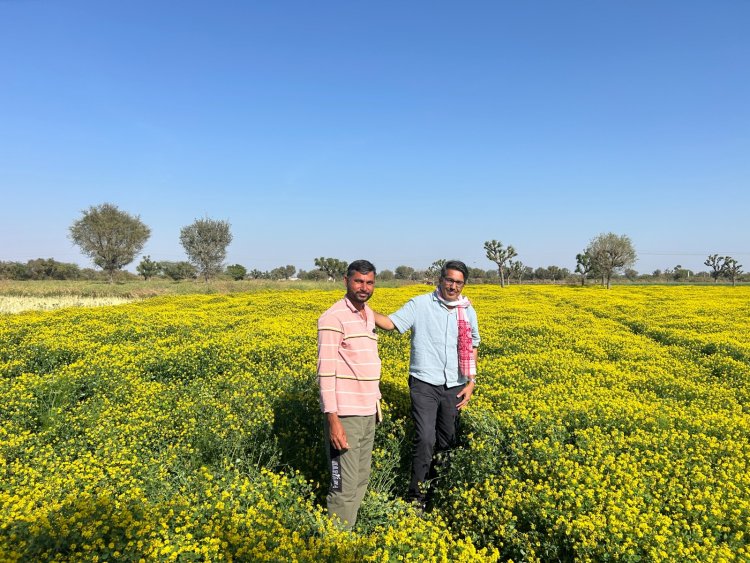
In a landmark development reinforcing farmers’ intellectual property rights in India, the Protection of Plant Varieties and Farmers’ Rights Authority (PPVFRA) of the Government of India has formally published the registration of “Nagauri Paan Methi” (Paan Methi) as a Community Farmers’ Variety. The registration appears in the February 2026 issue of the Plant Variety Journal, conferring statutory ownership and legal rights upon the farming community of Nagaur district in Rajasthan.
This historic milestone represents the world’s first sui generis intellectual property protection for Nagauri Paan Methi (Trigonella corniculata L.), recognizing the collective innovation, conservation, and custodianship of farmers who have nurtured this unique plant genetic resource for generations in the arid agro-ecology of Nagaur district in Rajasthan.
Legal Rights for Farmers
Registered under the Protection of Plant Varieties and Farmers’ Rights Act, 2001, the Community of Farmers of Nagaur, represented by women farmer Geeta Devi, Pradhan, Panchayat Samiti Mundwa, is now legally recognized as the rightful custodian and rights holder of Nagauri Paan Methi.
At a time when the Food and Agriculture Organization (FAO) is observing 2026 as the International Year of Women Farmers, the recognition of community rights by the PPVFRA for Nagauri Paan Methi marks a significant milestone. By granting rights to the farming community, particularly women farmers, the initiative represents an important step toward strengthening women’s empowerment in agriculture and recognizing the vital role of farmers in conserving traditional crop varieties.
The registration delivers a triple dividend of benefits to farmers:
• Protection against biopiracy and unauthorized commercial exploitation, including the sale of spurious and substandard seeds in the absence of a formal seed chain system.
• Entitlement to benefit sharing arising from research or commercial utilization of Nagauri Methi genetic resources.
• A significant step toward securing a Geographical Indication (GI) tag for Nagauri Paan Methi, which can enhance market recognition and enable farmers to receive better prices for their produce.
“The registration of ‘Nagauri Methi’ by the Plant Variety Authority is a historic recognition of generations of hard work by Nagaur’s farmers. Under the name ‘Mundwa Pradhan’, the farming community has effectively secured its intellectual property right — essentially its patent,” emphasized Dr Bhagirath Choudhary of the South Asia Biotechnology Centre (SABC).
With the support of the DBT Biotech Kisan Hub initiative and NABARD’s AEFC programme, Nagauri Paan Methi was earlier included in Schedule I of the Spices Board of India, opening formal export pathways. The long-standing misidentification under the name “Kasuri Methi” has now been corrected, restoring Nagauri Methi to its authentic identity in domestic and international markets, Dr Choudhary added.
The next phase will focus on securing a GI tag, developing food safety standards through the Food Safety and Standards Authority of India (FSSAI), creating an HSN code for exports, and implementing regulated procurement through the mandi system to strengthen market mechanisms and ensure farmers receive fair and remunerative prices.
Nagauri Paan Methi
Nagauri Paan Methi is cultivated exclusively in Nagaur district and is grown on more than 7,000 hectares. The crop is primarily produced in the regions of Mundwa, Nagaur, Merta City, Jayal, Degana, and Khinvsar.
Nagauri Paan Methi is a multi-cut leafy crop in which the leaves are harvested repeatedly and dried in the sun before being sold in the market. In each cutting, farmers obtain around 175 kilograms of dried leaves per acre, generating an income of nearly Rs 25,000 every ten days. With an average of ten cuttings per season, farmers earn about Rs 2.5 lakh per acre, making Nagauri Paan Methi one of the highest income-generating crops in India.
During the 2024-25 season, farmers in Nagaur district produced approximately 30,000 metric tonnes of dried Nagauri Paan Methi leaves, generating a total income of around Rs 450 crore for the farming community.
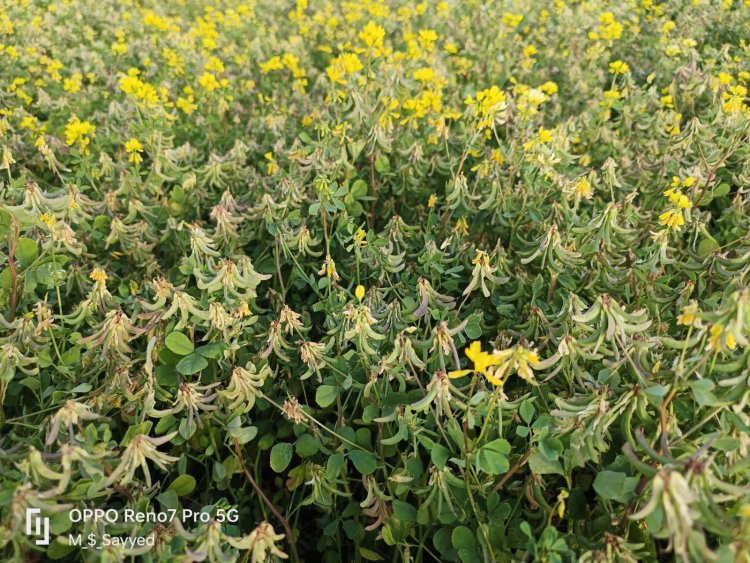
Nagauri Paan Methi possesses several distinctive characteristics that set it apart from other fenugreek varieties. Its most remarkable feature is its strong and unique aroma, which remains intact even after the leaves are dried. The seeds are relatively small in size, and the pods are sickle-shaped. The dried leaves have a rich flavor and intense fragrance, making them highly valued in spices and culinary preparations. Moreover, the unique soil and favourable climatic conditions of the Nagaur region further enhance the quality of this crop. As a result, Nagauri Paan Methi has established a distinct identity not only across India but also in international markets.
SABC’s Role
The registration of the Nagauri Paan Methi variety was made possible through sustained field-based research conducted over the past four to five years by the South Asia Biotechnology Centre (SABC), Jodhpur. The organization systematically documented the crop’s characteristics, cultivation practices, and distinct traits in farmers’ fields. Based on this scientific and field-level evidence, the application, along with seed material, was formally submitted to the Protection of Plant Varieties and Farmers’ Rights Authority on 25 June 2024 for registration.
The identification and scientific study of this unique fenugreek variety were carried out under the “Biotech Kisan Hub” programme supported by the Department of Biotechnology (DBT). The effort also received technical and institutional support from the ICAR-National Research Centre on Seed Spices and the NABARD-supported Agri Export Facilitation Centre (AEFC), helping validate the crop’s uniqueness and economic significance.
Even before the registration of Nagauri Paan Methi, the South Asia Biotechnology Centre had played a significant role in protecting farmers’ innovations and their intellectual property rights.
These achievements clearly demonstrate that farmers in Rajasthan are emerging not only as agricultural producers but also as custodians of biodiversity, innovators, and seed breeders, contributing significantly to the conservation and development of valuable crop varieties.
A Farmer-Centric Model
The registration of Nagauri Paan Methi as a community variety represents an important national and global model. It demonstrates how traditional farmer-developed varieties can be protected through modern legal frameworks, ensuring that farmers receive greater value for their produce and that the benefits arising from the seed trade and commercialization of such varieties are fairly shared with the farming communities that have preserved and nurtured them for generations.