
Floods Alter Punjab’s Soil Profile, Pose Threat to Rabi Crop Yields: PAU Study
The Punjab Agricultural University (PAU), Ludhiana, has released an extensive analysis of flood-affected soils across Punjab, revealing that the recent deluge has reshaped farmlands in complex ways.

 Join the RuralVoice whatsapp group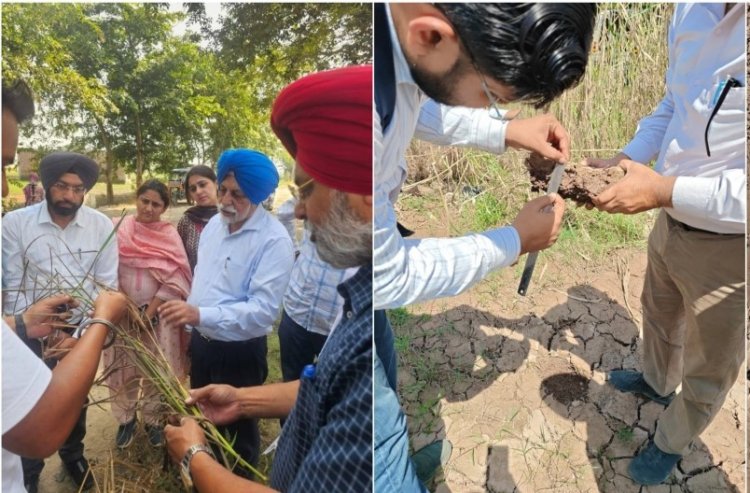
The recent floods in Punjab have significantly disturbed the state’s soil profile, creating nutrient imbalances and potential threats to Rabi crop productivity, according to an extensive analysis by Punjab Agricultural University (PAU), Ludhiana.
The Punjab Agricultural University (PAU), Ludhiana, has released an extensive analysis of flood-affected soils across Punjab, revealing that the recent deluge has reshaped farmlands in complex ways. While the red silt deposits from the Himalayan foothills have enriched certain areas with minerals, the floods have also caused nutrient imbalances, hardpan formation, and possible threats to rabi crop productivity.
Dr Satbir Singh Gosal, Vice-Chancellor of PAU, observed that the floods have altered the very foundation of Punjab’s agriculture, which is its soil. He explained that though the incoming mountain soil carries minerals beneficial for crops, it has disturbed the state’s native soil profile. The challenge now is to restore balance. The university, he added, has mobilized teams to test soil samples across affected districts and to guide farmers on corrective measures before the rabi sowing season begins.
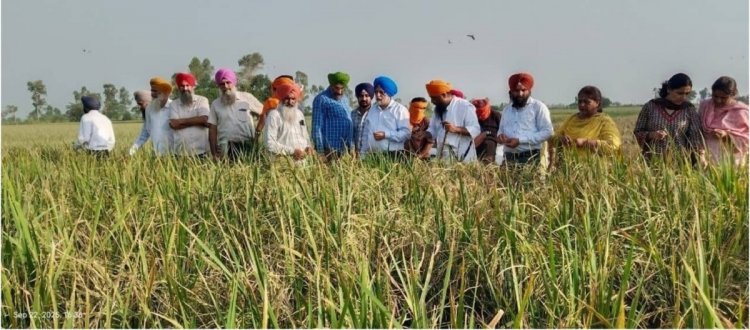
Under the supervision of Dr. Rajeev Sikka, the Department of Soil Science conducted field analyses in Amritsar, Gurdaspur, Ferozepur, Kapurthala, and Patiala. The study found wide variations in sediment depth, ranging from thin layers to deposits over one metre deep. Soil textures ranged from sandy to fine loam, with generally alkaline pH levels and low electrical conductivity — indicating no major salinity risk.
Encouragingly, the organic carbon content averaged above 0.75 per cent, higher than Punjab’s usual 0.5 per cent, and exceeded one per cent in some samples. However, areas with heavy sand deposits showed lower carbon levels. Micronutrients such as iron and manganese were abnormally high, likely due to iron-coated sand particles carried by floodwaters.
Dr Ajmer Singh Dhatt, Director of Research, warned that compacted sediments have caused surface and subsurface hardpans in several areas, impeding water infiltration and root growth. He recommended deep tillage with a chisel plough for heavy soils and thorough mixing of silt and clay in lighter ones to restore porosity.
Meanwhile, Dr Makhan Singh Bhullar, Director of Extension Education, urged farmers to enrich soil with organic matter through farmyard manure, poultry manure, and green manures. He emphasized avoiding paddy straw burning and instead incorporating it into the soil to enhance microbial activity and fertility.
For the rabi season, PAU has advised farmers to follow the university’s recommended fertilizer doses and apply a 2 per cent urea spray (prepared by dissolving 4 kg urea in 200 litres of water) about 40 to 50 days after sowing to boost growth. In wheat and barseem crops, manganese deficiency should be watched for; if symptoms appear, a 0.5 per cent foliar spray of manganese sulphate (0.5% solution of manganese sulphate in 100L of water per acre) is recommended and repeated after a week.
Dr Gosal concluded that although floods have disrupted Punjab’s cropping cycles, “timely soil management can turn this setback into an opportunity.” Through coordinated testing, targeted nutrient management, and farmer outreach, PAU aims to restore the fertility and resilience of Punjab’s farmlands.