
Farmers need to adopt crops without MSP to become self-reliant: Prof. Ramesh Chand
At the Rural Voice Agriculture Conclave 2025, NITI Aayog Member Prof. Ramesh Chand urged farmers to shift towards non-MSP crops and adopt a holistic food-system approach to become self-reliant. Speakers including ICAR DG Dr. M.L. Jat and TAAS Chairman Dr. R.S. Paroda stressed innovation, market linkages, incentives over subsidies, specialised farming zones, cooperatives, and stronger policy coordination to boost farmer income and resilience.

 Join the RuralVoice whatsapp group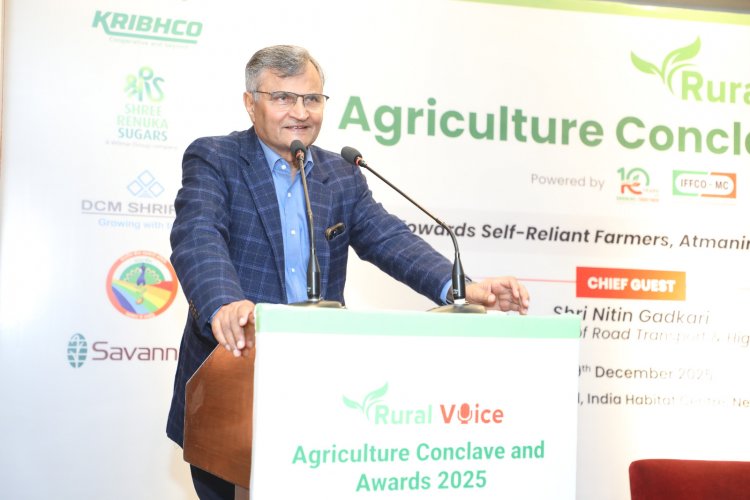
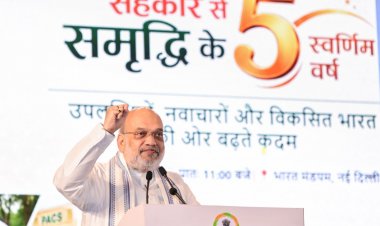
NITI Aayog Member and agricultural economist Prof. Ramesh Chand has urged farmers to shift towards crops not covered under the Minimum Support Price (MSP) and to prioritise a holistic food system in agricultural planning. He said this approach is essential for making farmers self-reliant in a Atmanirbhar Bharat. Prof. Chand was addressing the ‘Rural Voice Agriculture Conclave and Awards 2025’, held in New Delhi on Tuesday to mark the five-year anniversary of the media platform Rural Voice. Several leading figures from India’s agricultural sector addressed the conclave.
Prof. Chand said, “The government certainly has a role in the development of the agricultural sector, but can farmers take steps on their own for which they currently rely on the government? Only then will farmers truly become self-reliant.” He noted that over the past decade, MSP-linked crops have grown at a rate of 1.8 percent, while crops without MSP have grown at around 4 percent.
He said agricultural growth has averaged 4.6 percent over the past decade, but domestic demand is growing at just about 2 percent. In such a scenario, what should be done with surplus production? A wealthy class with strong purchasing power is growing in the country, he said, and farmers can earn significantly more by cultivating crops that cater to this demand. This will require developing the entire value chain.
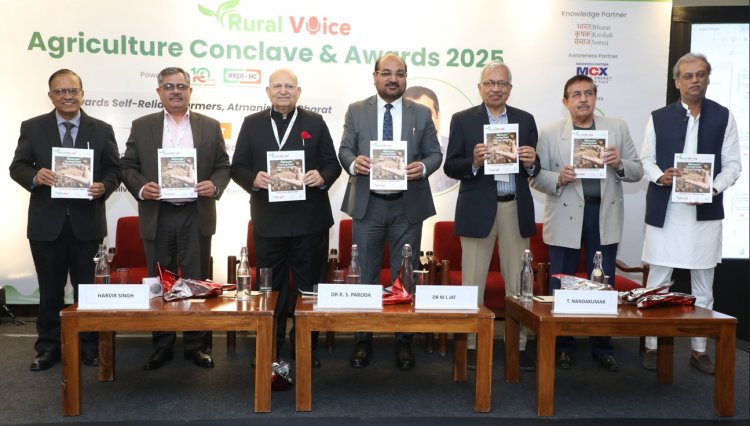
The latest edition of Rural World Magazine was launched at the event.
He noted that global agricultural planning is now shifting towards a food-system approach, covering the entire value chain from seeds to marketing and distribution. Integration into the value chain, he said, boosts farmers’ incomes.
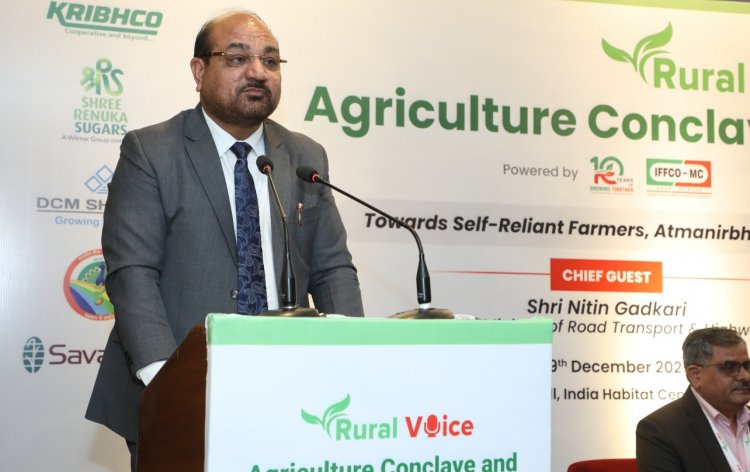
Harvir Singh, Editor-in-Chief of Rural Voice, spoke about the platform’s five-year journey. He said Rural Voice was launched to empower farmers through information, and the conclave was organised with this objective. For India to become self-reliant, farmers must be empowered, which requires innovation, technology, and policy support. Farmers must also be placed at the centre of policymaking, he said.
Dr. M.L. Jat, Secretary of the Department of Agricultural Research and Education (DARE) and Director General of ICAR, said self-reliant farmers are vital to the vision of a developed India. He called for innovation, specialised farming, skill development, market linkages, incentives instead of subsidies, and the promotion of technology- and market-driven agriculture. Innovation, he said, will help farmers increase productivity and reduce costs.
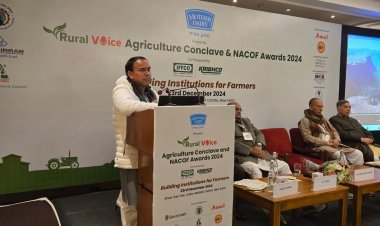
Dr. ML Jat during his speech at the conclave.
Dr. Jat emphasised adopting incentives instead of subsidies, as subsidies limit farmers’ ability to choose crops. He said farmers with rising incomes are either diversifying or connecting with markets. India must move towards market-driven agriculture, he said. Referring to specialised farming zones, he said that developing zones according to crops and regions, along with setting up factories and research institutes there, will ensure better prices for farmers. In such a system, they would not need MSP.
The ICAR chief also stressed the adoption of bio-fertilisers to reduce dependence on chemical fertilisers and protect soil, biodiversity, and the environment. He said the technology exists, but it is not reaching farmers, making technology targeting and skill development essential.
Padma Shri Dr. R.S. Paroda, Chairman of the Trust for Advancement of Agricultural Sciences (TAAS), former Secretary of DARE, and former Director General of ICAR, underlined the need for policies and research focused on smallholder farmers. He said farmers, too, must explore alternatives to achieve self-reliance.
He said the extension system is weak. The number of ministries related to agriculture has increased to seven, but they lack coordination. According to Dr. Paroda, India needs a single policy for agriculture and farmer welfare, along with a mechanism for listening to farmers. Farmers need not take to the streets to be heard. As agriculture is a state subject, better coordination is required. He suggested establishing an agriculture council on the lines of the GST Council. He also recommended replacing subsidies with incentives and strengthening public-private partnerships.
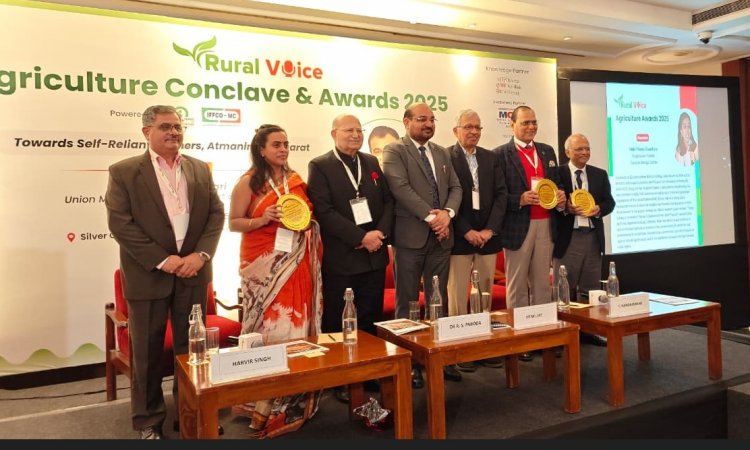
Three awards were conferred at the conclave.
Former Union Agriculture and Food Secretary T. Nandakumar stressed the need for adopting a holistic food system in agriculture and raised several important questions. He said that under the vision of a developed India by 2047, focus is largely on manufacturing, technology, and services, but questions must be asked about the role of agriculture and farmers.
He said agriculture contributes 16 percent to the country’s GDP and supports about 45 percent of the population. Can this share be reduced to 12 percent of GDP, and can 45 percent of the population continue to depend on it? He pointed out that for most farmers, not even half of their income comes from crops. Alternatives must be explored to raise their incomes, and how this will be achieved remains a crucial question. He also highlighted the threat of climate change.
Dr. Chandrapal Singh, Vice Chairman of KRIBHCO and President of the International Cooperative Alliance (ICA) Asia-Pacific, underlined the role of cooperatives in agriculture. He said PACS now provide farmers with affordable seeds, fertilisers, and loans, and also help procure their produce. Cooperatives like IFFCO, KRIBHCO, and NAFED are strong enough to compete with multinational companies. He said cooperatives should also be used as channels for implementing government schemes to make farmers self-reliant.
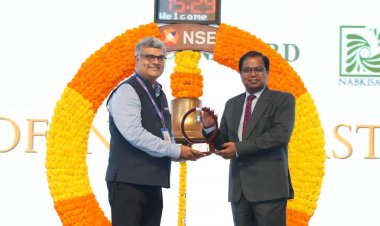
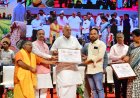
Rural Voice Awards were presented on the occasion. Dr. Ashok Kumar Singh, former Director of IARI, was honoured in the Eminent Agri-Scientist category; Dr. Rajendra Barwale, Chairman of Mahyco Pvt. Ltd., in the Agri-Corporate category; and Nikki Pilania Chaudhary from Pilibhit district of Uttar Prades in the Progressive Farmer category.
The first bimonthly issue of Rural World magazine was also released at the event. The magazine, previously published quarterly, will now appear every two months.