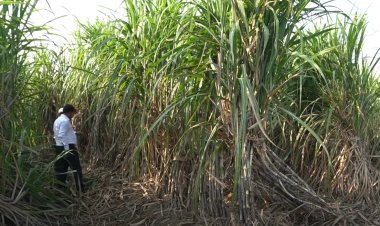

Rain and Hailstorms Damage Crops Across India, Farmers Face Heavy Losses
Rain and hailstorms triggered by a western disturbance have caused widespread crop damage across several Indian states, severely impacting wheat, mustard, and horticultural produce. Farmers face heavy losses during harvest, amid rising concerns over reduced yields, poor grain quality, and financial distress.

 Join the RuralVoice whatsapp group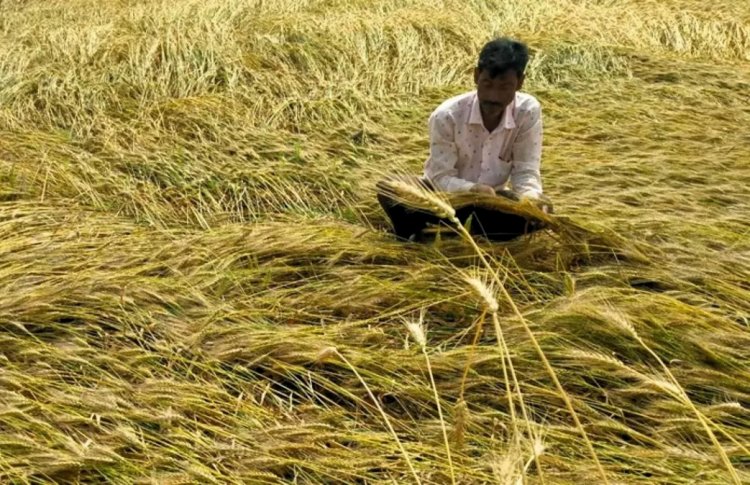
Unseasonal rain and hailstorms have caused widespread damage to crops across several Indian states, dealing a major blow to farmers just as harvest season begins. Key crops such as wheat, mustard, gram, and vegetables have been severely affected, raising concerns over both production and farmer incomes.
According to the India Meteorological Department, the sudden weather activity has been triggered by an active western disturbance. This system has brought rain and hailstorms to large parts of northern, central, and western India, impacting states including Rajasthan, Uttar Pradesh, Haryana, Punjab, Madhya Pradesh, and Maharashtra.
Experts warn that moisture exposure at this stage can reduce grain quality, making it difficult for farmers to secure fair prices in agricultural markets.
State-wise Impact
Rajasthan:
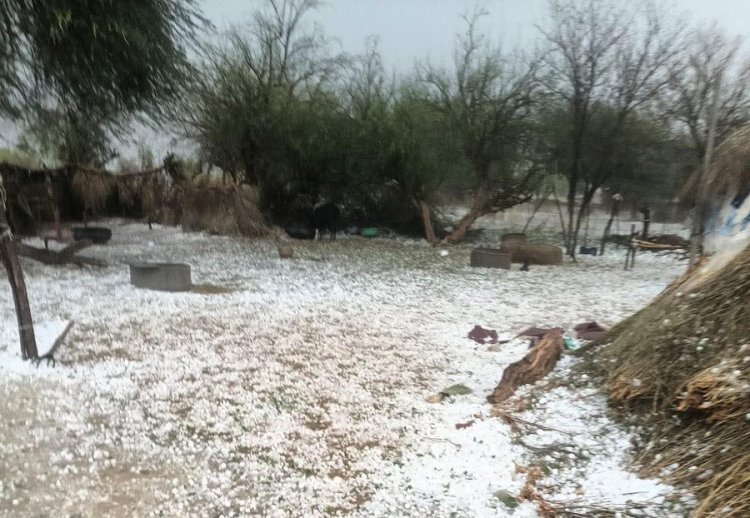
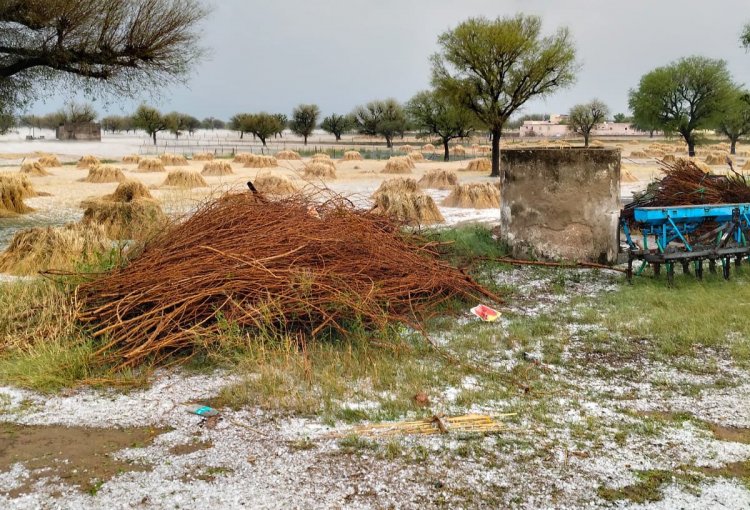
Several districts such as Jaipur, Bikaner, Sri Ganganagar, Hanumangarh, Jodhpur, Ajmer, Churu, and Sikar have reported extensive crop damage due to hailstorms. Wheat, mustard, isabgol, and cumin crops have been hit hard. In some areas, fields were covered with a thick layer of hail, resembling snow, and ready-to-harvest crops were completely destroyed.
Maharashtra:
Around 122,000 hectares of farmland have been affected. Northern districts, including Nashik and Ahmednagar, alone account for over 64,000 hectares of damage. Horticulture crops such as grapes, mangoes, onions, and bananas have suffered significant losses in districts like Nashik, Jalgaon, Ahilyanagar, and Buldhana.
Uttar Pradesh:
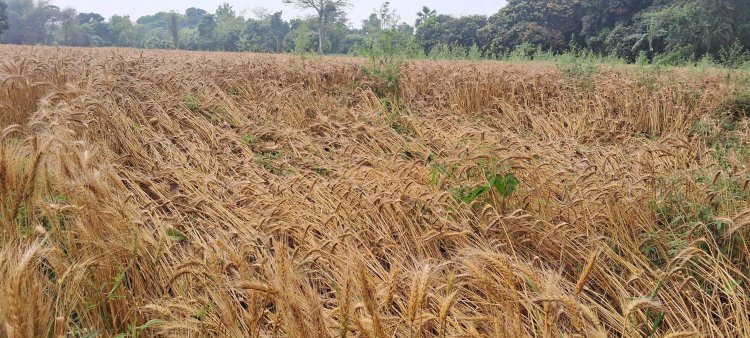
More than 4,000 hectares across 17 districts have been impacted. Strong winds, rain, and hail have flattened wheat and mustard crops. Farmers fear discoloration and deterioration in grain quality due to prolonged moisture exposure.
Haryana and Punjab:
Regions including Hisar and Jind have seen standing wheat and mustard crops flattened by hailstorms. An orange alert has been issued in Punjab for April 4, indicating the likelihood of severe weather conditions.
Other States:
Localized damage has also been reported from Bihar, Madhya Pradesh, and Andhra Pradesh.
Field reports from rural areas suggest that crop losses could range between 30% and 40% in several locations.
Impact on Wheat Production
Farmers and traders indicate that while wheat output in 2026 may still surpass last year’s levels, it is likely to fall short of initial projections. The crop had already been stressed by an early March heatwave, followed by continuous unseasonal rain and hail over the past two weeks.
Demand for Compensation
Farmer leader Rakesh Tikait has called for immediate government intervention, stating that the losses are both economic and food-related. He urged central and state governments to conduct field-level assessments, treating each farm as a unit, and provide adequate compensation.
Several state governments have announced damage assessments and interim relief measures. However, farmers say assistance must reach them quickly at the ground level.
Weather Forecast
The IMD has forecast that the current spell of rain and hailstorms is likely to continue on April 4 across northwestern India due to the ongoing western disturbance. Another such system is expected to affect the region later this week, with peak intensity likely on April 7 and 8.
Heavy rainfall is also expected in parts of the Kashmir Valley. Meanwhile, central, eastern, and peninsular regions may experience thunderstorms and lightning until April 8. Hailstorms are likely in parts of Maharashtra, Madhya Pradesh, Chhattisgarh, West Bengal, Sikkim, Bihar, and Jharkhand over the coming days.
Day temperatures across most parts of the country are expected to remain below normal or near normal over the next week, offering some relief from earlier heat but posing continued risks to standing crops.