
RBI Keeps Repo Rate at 5.25 percent Amid Iran War Risks, GDP Growth Seen Slowing and Inflation Rising This Year
The RBI kept the repo rate unchanged at 5.25% while maintaining a neutral stance, citing global uncertainties and the West Asia conflict. Growth for 2026-27 is projected at 6.9% and inflation at 4.6%. Strong domestic fundamentals offer resilience, but risks from energy prices, supply disruptions, and geopolitics remain elevated.

 Join the RuralVoice whatsapp group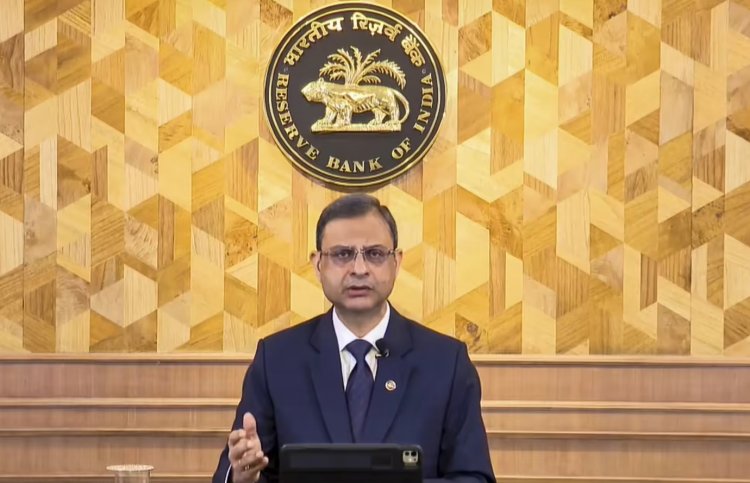
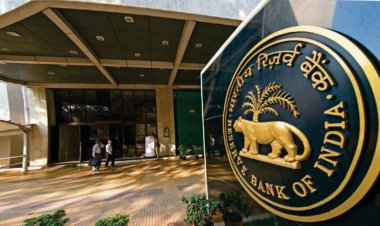
Reserve Bank of India’s Monetary Policy Committee (MPC) has decided to keep the policy repo rate unchanged at 5.25% following its 60th meeting held from April 6 to 8, 2026, under the chairmanship of Governor Sanjay Malhotra. The decision was unanimous among all six MPC members. Consequently, the standing deposit facility (SDF) rate remains at 5.00%, while the marginal standing facility (MSF) rate and the Bank Rate continue at 5.50%. The committee also retained its ‘neutral’ policy stance, preserving flexibility to respond to evolving economic conditions.
Global Risks Weigh on Outlook
The MPC highlighted rising global uncertainties, particularly due to the ongoing conflict in West Asia, which has disrupted supply chains and increased volatility in financial markets. The conflict has driven up energy prices, hardened sovereign bond yields, and triggered corrections in equity markets. Safe-haven demand has strengthened the US dollar, exerting pressure on global currencies.
The central bank warned that further escalation or prolonged conflict poses significant downside risks to global growth. The Governor said, disruptions in energy markets, fertilisers and other commodities may adversely impact industry, agriculture and services, reducing domestic output.
Domestic Economy Shows Resilience
Despite global headwinds, India’s domestic economy remained resilient in 2025-26. Real GDP is estimated to grow at 7.6%, supported by strong private consumption and investment. On the supply side, growth was driven by robust manufacturing activity and a buoyant services sector.
Looking ahead, however, elevated energy prices and supply disruptions - especially through key routes such as the Strait of Hormuz - are expected to weigh on domestic production in 2026-27. Increased freight and insurance costs may impact exports, while global financial volatility could tighten domestic conditions.
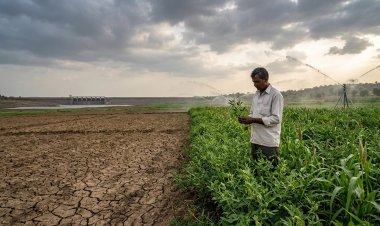
In his statement, Malhotra said, the agricultural sector's prospects are supported by healthy reservoir levels. Rural demand remains robust.7 It should gain further traction on the back of favourable agricultural conditions and a healthy labour market.
Growth Outlook Moderates to 6.9%
Taking these factors into account, the RBI has projected real GDP growth for 2026-27 at 6.9%. Quarterly projections stand at 6.8% in Q1, 6.7% in Q2, 7.0% in Q3, and 7.2% in Q4. While risks remain tilted to the downside, the central bank expects growth to be supported by sustained momentum in the services sector, rising capacity utilisation in manufacturing, GST rationalisation, and strong balance sheets of corporates and financial institutions.
The government’s push to scale up domestic manufacturing in strategic sectors is also expected to strengthen India’s medium-term growth trajectory.
Inflation Outlook and Risks
Retail inflation, based on the new CPI series, rose to 3.2% in February 2026 from 2.7% in January, largely due to base effects. Core inflation remained subdued, indicating limited underlying price pressures.
For 2026-27, CPI inflation is projected at 4.6%, with quarterly estimates of 4.0% in Q1, 4.4% in Q2, 5.2% in Q3, and 4.7% in Q4. However, risks are skewed to the upside due to volatile global energy prices and the potential emergence of El Niño conditions, which could impact agricultural output and food prices.
External Sector and Financial Conditions
India’s external sector remains stable, supported by strong services exports and remittances. However, merchandise exports have been impacted by global disruptions, while imports have risen sharply, widening the trade deficit. Foreign exchange reserves stood at $697.1 billion as of early April 2026, providing a strong buffer.
Financial conditions remain stable, with adequate liquidity in the banking system and steady credit growth. The RBI has reiterated its commitment to managing liquidity proactively and ensuring sufficient funds to support economic activity.
Additional Measures Announced
The RBI also announced several policy measures aimed at improving ease of doing business, strengthening bank capital adequacy, and developing financial markets. These include rationalising regulatory instructions, easing onboarding norms for MSMEs on TReDS platforms, and allowing broader participation in the term money market.
Policy Rationale: Wait and Watch Approach
The MPC emphasised that the Indian economy is currently facing a supply shock driven by global factors. While inflation remains within target, rising risks and uncertainty warrant a cautious approach. The committee opted to maintain the current policy rate while closely monitoring evolving developments.
Governor Sanjay Malhotra reiterated that India’s macroeconomic fundamentals are stronger than in previous crises, providing resilience against external shocks. However, the central bank will remain vigilant and ready to act as needed to safeguard growth and price stability.