
Fearing Price Drops, US Farmers Shun Data Sharing with U.S. Department of Agriculture
American farmers are increasingly refusing to share data with the USDA due to mistrust, concerns over price impacts, and survey complexity. Falling participation threatens the accuracy of key agricultural reports, raising risks for market volatility, policy decisions, and global food price benchmarks reliant on USDA data.

 Join the RuralVoice whatsapp group
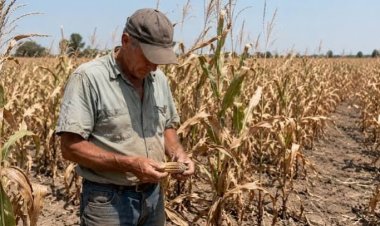
A growing number of American farmers are choosing not to share critical agricultural data with the U.S. Department of Agriculture, reflecting a deepening trust deficit that could undermine the reliability of official crop reports and increase volatility in global markets.
Response rates to key surveys conducted by the National Agricultural Statistics Service have steadily declined over the years. The agency’s annual prospective planting survey recorded a historic low participation level recently, with only about one-third of farmers responding, compared to nearly 60% participation less than a decade ago.
Accordint to a report by The Sentinel, farmers say their reluctance stems from a belief that USDA reports often work against their economic interests. With consecutive years of strong harvests, crop prices have remained under pressure, and many producers feel that the data they provide contributes to market signals that ultimately reduce their earnings.
There is also concern about the accuracy and impact of USDA estimates. A recent crop report that raised the U.S. corn production estimate to a record level caught markets off guard, triggering a sharp fall in futures prices. Such unexpected revisions have reinforced farmers’ perception that the data collection and reporting process lacks transparency and consistency.
Many farmers argue that participating in surveys is time-consuming and difficult, especially during busy farm operations. In some cases, responses are based on rough estimates rather than precise records, raising further doubts about data quality. This, in turn, feeds into a cycle where questionable accuracy leads to declining trust, and declining participation further weakens the reliability of the data.
The implications extend beyond farmers. USDA data serves as a benchmark for global agricultural markets, influencing crop prices, trade flows, and even food inflation. Lower participation risks eroding the credibility of what has long been considered a gold standard in agricultural statistics.
Efforts are underway within the USDA to address these concerns. The agency has indicated that it is working to improve engagement with farmers and enhance data accuracy. Initiatives such as streamlined data collection systems aim to reduce the reporting burden and make participation more efficient. However, rebuilding trust remains a significant challenge.
The issue also carries political implications. Farmers are a crucial constituency, and their growing skepticism toward federal data systems could complicate broader policy efforts aimed at supporting the agricultural sector.
Experts warn that without stronger farmer participation, the effectiveness of agricultural policy, market forecasting, and risk management tools could be compromised. At the same time, farmers emphasize that restoring confidence will require greater transparency, clearer communication on how data is used, and assurance that reporting will not negatively impact their livelihoods.