
Global Dairy Surplus Pushes USDA to Allocate New Funds to Boost Exports
Rising milk production in countries like the UK and Russia has created a global dairy surplus, pressuring prices and farmers. Despite this the USDA is boosting export efforts to expand market access. Meanwhile, evolving demand patterns in China highlight shifting consumption trends, making global competition in dairy trade more intense.

 Join the RuralVoice whatsapp group
Amid rising milk production and mounting surplus across key global markets, the United States Department of Agriculture (USDA) has unveiled a fresh initiative to strengthen dairy exports and expand the global footprint of American dairy products. Announced on April 20, 2026, the move reflects growing urgency among major producers to find new markets as supply outpaces demand in several regions.
The USDA’s plan to allocate additional funds for export promotion comes at a time when global dairy markets are facing structural imbalances. Although the exact funding details remain undisclosed, the initiative is aimed at helping U.S. dairy producers access new international markets and remain competitive against other major exporting nations.
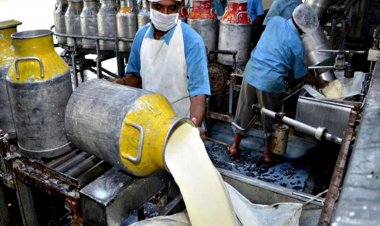
The global context underscores the need for such a strategy. In the United Kingdom, milk production has surged to a record 13.02 billion litres in the 2025/26 season, according to the Agriculture and Horticulture Development Board. Favourable weather and strong feed availability have boosted output, but falling milk prices and rising input costs are squeezing farmers’ margins. The growing supply is also putting pressure on processing capacities, particularly during peak production periods.
A similar trend is visible in Russia and neighboring regions, where a structural surplus of raw milk has led to declining prices and rising inventories of dairy products such as cheese and butter. Industry experts note that production continues to exceed domestic consumption, while limited export capacity and global market constraints are restricting the ability to offload excess supply. This has intensified pressure on smaller farms, with many struggling to remain viable.
Meanwhile, in China, the dairy sector is undergoing a transformation rather than a slowdown. While domestic production is increasing and imports are gradually declining, consumer demand is shifting towards value-added and functional products. Factors such as lactose intolerance among a large share of the population and rising health awareness are driving demand for lactose-free and plant-based alternatives. The market is also being reshaped by digital platforms, changing consumption patterns, and growing demand for specialized dairy products.
Together, these trends point to a broader global scenario where traditional dairy consumption is no longer keeping pace with production growth. In this environment, export-led strategies are becoming critical for balancing markets. The USDA’s renewed push is therefore seen as an effort to tap into emerging opportunities, particularly in evolving markets like Asia.
By enhancing export capabilities, the U.S. aims not only to manage domestic surplus but also to secure a stronger position in the increasingly competitive global dairy trade. As production continues to rise worldwide, the race to capture new consumers and markets is likely to intensify further.