Centre Floats Draft Sugarcane Order 2026, Tightens Khandsari Rules, Raises Mill Distance to 25 Km
The Centre has released the draft Sugarcane (Control) Order, 2026, proposing a major overhaul of India’s sugar sector regulations for the first time in nearly six decades. Key provisions include raising the minimum distance between new sugar mills to 25 km, bringing khandsari units under stricter regulation, and enforcing timely cane payments to farmers

 Join the RuralVoice whatsapp group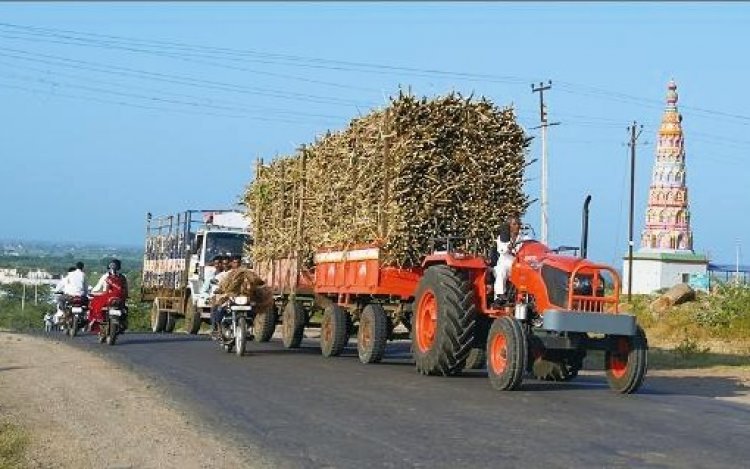
The Union government has released a draft Sugarcane (Control) Order, 2026, proposing a comprehensive overhaul of the legal framework governing India’s sugar sector, which has been in place since 1966. Issued by the Ministry of Consumer Affairs, Food and Public Distribution on April 20, the draft seeks stakeholder comments by May 20.
The government has proposed increasing the minimum distance between two sugar mills from 15 km to 25 km. A key feature of the proposal is the introduction of stricter regulation for khandsari units, including mandatory licensing, regular inspections, and compliance checks. These units will also be required to pay sugarcane farmers the notified Fair and Remunerative Price (FRP).
The draft comes amid stagnant sugar consumption, a policy push towards ethanol, and concerns over the diversion of sugarcane to jaggery and khandsari units. Rough estimates suggest that around 20 to 25 per cent of India’s annual sugarcane output is used by the gur, jaggery, and khandsari industries.
The increasing purchase of sugarcane by jaggery and khandsari units is seen as a major reason behind the difficulties faced by sugar mills in securing adequate cane supply in Uttar Pradesh. The government appears keen to bring the unorganised segments under a more structured regulatory framework.
Khandsari is a traditional, unrefined form of sugar produced from sugarcane and widely consumed across rural and semi-urban India. Last year, the government amended the Sugar (Control) Order, 1966, to include khandsari units (with a capacity of more than 500 TCD) under the regulatory framework.
25 Km Distance Norm
The draft proposes increasing the minimum distance between two sugar mills to 25 km from the existing 15 km for setting up a new sugar factory. A state government, with prior approval from the Centre, can set a higher minimum distance more than 25 km between two sugar mills, or fix different minimum distances (not below 25 km) for different regions.
It also proposes stricter norms for project approvals, including a Rs 2 crore bank guarantee and a five-year deadline to commence production. To curb speculative practices, the draft bars the transfer of industrial entrepreneur memorandums before a factory becomes operational, except in cases such as insolvency proceedings.
Penalty on Delayed Payments
The proposed order retains the provision requiring cane payments within 14 days of procurement, failing which sugar mills will be liable to pay interest at 14 per cent per annum on delayed payments. However, this provision has not been enforced in practice, and farmers often do not receive this interest.
In addition, the draft strengthens enforcement by mandating that unpaid dues at the end of a sugar year must be deposited with the district collector within three months. The collector will then disburse payments to farmers based on verified claims filed within three years. Any unclaimed amount after this period will be transferred to the state’s consolidated fund and used for sugarcane development.
Ethanol Integration
Reflecting India’s push towards ethanol blending, the draft formally integrates ethanol into the sugar sector’s regulatory framework. It proposes that 600 litres of ethanol produced from cane-based feedstock be treated as equivalent to one tonne of sugar, a move expected to influence production planning and pricing mechanisms in the industry. By-products such as bagasse, molasses, and press mud will also be factored into valuation.
Political Context
The timing of the draft is significant, coming ahead of the 2027 Uttar Pradesh Assembly elections, where the sugarcane economy plays a crucial role, especially in western UP. Payment delays and cane pricing remain politically sensitive issues in the region. This year, sugar mills in the state have crushed about 6.3 million tonnes less sugarcane than last year due to a supply shortfall.
A Major Policy Reset
The proposed amendment to the Sugarcane (Control) Order, 1966, is an important step in light of technological advancements, the ethanol blending programme, and evolving challenges in the sugarcane sector. It is expected to have far-reaching implications for both farmers and sugar mills.
Industry experts note that while several provisions in the draft already exist in the 1966 order, some of the new changes require detailed examination. Some stakeholders have also expressed concern over penalties on delayed payments.