
RBI Holds Repo Rate at 5.25%, Flags Inflation Risks from El Niño and Oil Shock; Cuts FY27 Growth Forecast to 6.6%
The Reserve Bank of India (RBI) kept the repo rate unchanged at 5.25% and retained a neutral policy stance, citing rising inflation risks from elevated crude oil prices, geopolitical tensions and potential El Niño conditions. The central bank raised its FY27 inflation forecast to 5.1% and lowered GDP growth projections to 6.6%, while unveiling measures to support the rupee and attract foreign capital.

 Join the RuralVoice whatsapp group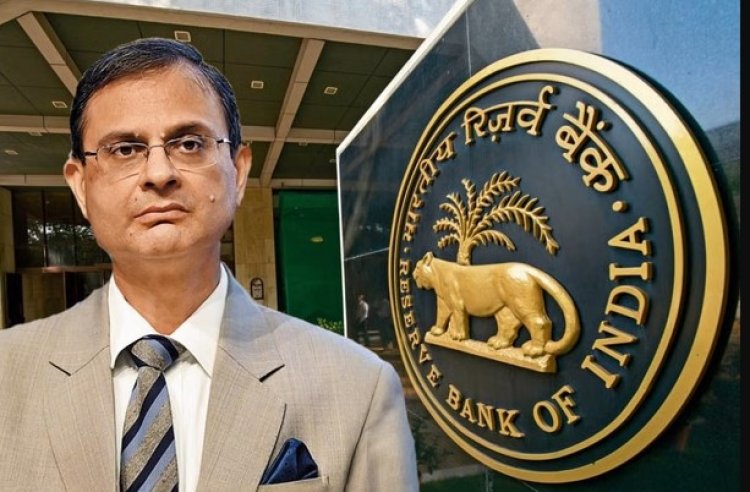
The Reserve Bank of India (RBI) on Friday kept the benchmark repo rate unchanged at 5.25 per cent and retained its “neutral” monetary policy stance, choosing caution over further policy easing amid growing concerns over inflationary pressures from rising crude oil prices, geopolitical tensions and the possibility of El Niño-related weather disruptions.
Announcing the decisions of the Monetary Policy Committee (MPC), RBI Governor Sanjay Malhotra said the central bank remains focused on maintaining price stability while supporting economic growth in an increasingly uncertain global environment. The six-member MPC unanimously voted to keep the policy rate unchanged.
Inflation to move higher
A key concern highlighted by the RBI was the changing inflation outlook. The central bank raised its consumer price inflation (CPI) projection for FY2026-27 to 5.1 per cent from the earlier estimate of 4.6 per cent, reflecting the impact of higher global energy prices, exchange-rate pressures and weather-related risks.
In its statement, the central bank said, "Since May, however, retail fuel prices have been raised cumulatively by 7.4 per cent for petrol and 8.4 per cent for diesel. The increase implies a direct impact of about 36 basis points on headline inflation, which, along with second order effects, would get reflected in CPI inflation in the coming months. Pass-through of higher global energy prices are also visible in several other inputs such as commercial LPG, industrial raw materials, chemicals, rubber and plastic products. The second-round impact of higher input costs could exert upside pressure on CPI inflation going forward."
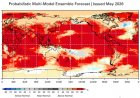
The RBI warned that a possible El Niño event could adversely affect the southwest monsoon, posing risks to agricultural production and food prices. Such weather disruptions could be particularly significant for pulses, oilseeds and other rain-fed crops, potentially feeding into broader inflationary pressures. Earlier policy assessments had also identified possible El Niño conditions as an upside risk to inflation.
Beyond weather concerns, policymakers are closely monitoring the impact of escalating tensions in West Asia, which have pushed global crude oil prices higher. As India imports the bulk of its oil requirements, sustained increases in energy prices could widen the import bill, weaken the rupee and add to inflationary pressures across the economy.
GDP growth to slow
Reflecting these challenges, the RBI revised its growth outlook downward. The central bank now expects India’s real GDP growth to moderate to 6.6 per cent in FY2026-27, compared with its earlier forecast of 6.9 per cent. The downgrade reflects concerns over global uncertainty, energy market volatility, adverse weather conditions and potential disruptions to trade and investment flows.
Despite the downward revision, the RBI noted that the domestic economy continues to display resilience. High-frequency indicators, including industrial activity, services sector performance and purchasing managers’ surveys, suggest that economic momentum remains intact. Strong domestic demand, ongoing infrastructure spending and healthy credit growth are expected to provide support to overall economic activity.
The policy decision also comes against the backdrop of a weakening rupee, which has come under pressure due to rising oil prices and foreign capital outflows. To strengthen external sector stability and encourage foreign investment, the RBI and the government announced a series of measures aimed at attracting dollar inflows. These include steps to make investments in government securities more attractive for overseas investors and initiatives to support foreign currency inflows from non-resident Indians.
Financial markets largely welcomed the status quo decision, viewing it as a balanced approach that avoids tightening monetary conditions while keeping inflation risks under watch. Analysts noted that maintaining the repo rate should help preserve business confidence and support lending activity, even as policymakers remain vigilant about evolving global risks.
With inflation risks rising and growth facing headwinds, the RBI’s latest policy underscores the delicate balancing act confronting policymakers. For now, the central bank appears prepared to wait for greater clarity on monsoon developments, global oil markets and geopolitical tensions before making any significant shift in monetary policy.
Dipti Deshpande, Principal Economist, Crisil Ltd said, "Bigger moves were seen on attracting foreign capital and supporting the rupee, which has depreciated sharply, posing a bigger concern than growth and inflation so far."
The RBI focussed on easing domestic regulations for foreign capital investors. It, however, gave clear communication on its rupee management, which remains rooted in curbing excessive volatility and speculation rather than defending a specific level.
"Our forecasts of CPI inflation at 5.1% and GDP growth at 6.6% for this fiscal align with those of the MPC. With this, headline inflation will stay within MPC’s target range of 2-6% despite rising from the current rate and edging closer to the upper tolerance inflation band in the interim. If the energy prices normalise in the coming months, we expect the MPC to look through the short-term rise in inflation," she said.
She said, "The MPC will balance its inflation mandate with growth, where downside risks are also deepening with prolonging of the conflict. In the milieu, we expect the MPC to keep rates unchanged this fiscal."