
West Bengal Polls: EC Tightens Grip with Officer Transfers and High-Tech Surveillance Push
The Election Commission has intensified oversight in West Bengal polls through officer reshuffles and large-scale deployment of car-mounted surveillance cameras. The transfer of former Kolkata Police Commissioner Supratim Sarkar as an observer, despite earlier removal, has raised questions, while enhanced tech monitoring aims to curb electoral malpractices amid privacy concerns.

 Join the RuralVoice whatsapp group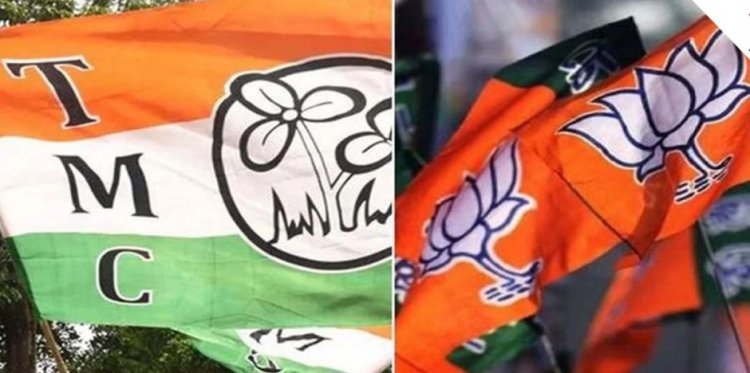
As West Bengal heads into a closely watched two-phase Assembly election on April 23 and 29, the Election Commission of India (ECI) has intensified its oversight through a mix of administrative reshuffles and technology-driven surveillance, triggering both political reactions and institutional questions.
In a significant development, former Kolkata Police Commissioner Supratim Sarkar, recently removed from his post by the ECI, has been deputed as an election observer to Tamil Nadu. Sarkar, now serving as additional director-general of police (CID), is the only officer of his rank from the Bengal cadre assigned such a role outside the state. However, he has reportedly sought exemption from the posting, and his application remains pending.
Sarkar’s brief tenure as Kolkata Police Commissioner lasted less than two months. Appointed on January 30, he was removed on March 16, just a day after the ECI announced the Bengal poll schedule. Following his removal, the state government reinstated him as CID chief. His reassignment now has sparked debate, especially within sections of the state administration, which see a contradiction in the EC’s approach.
Officials point out that the EC had earlier deemed several officers, including Sarkar, unfit for election-related duties within Bengal and had directed their transfer to non-election roles. Yet, some of these very officers are now being deployed as observers in other poll-bound states.
The ECI had initially ordered 15 Bengal cadre officers to serve as observers in Tamil Nadu, Kerala, and Nagaland. Subsequently, it rescinded orders for five officers, including the police commissioners of Bidhannagar and Siliguri. Of the remaining 10 officers, two have already applied for exemption citing personal reasons, while Sarkar’s request is still under consideration.
Meanwhile, Chief Minister Mamata Banerjee has used recent developments to sharpen her political attack on the opposition. Referring to the arrest of the alleged mastermind behind an attack on judicial officers in Malda, she emphasized the role of the CID, under state control, rather than local police, which are currently under EC supervision. She alleged that external elements linked to rival political parties were involved, while asserting that the CID had effectively handled the case.
Parallel to administrative actions, the EC has rolled out an extensive surveillance mechanism across the state, marking a significant escalation in election monitoring. Car-mounted live IP cameras have been deployed across Kolkata and other districts, transforming moving vehicles into real-time surveillance units.
These cameras, particularly the advanced PTZ (pan-tilt-zoom) variants, are mounted on vehicles used by static surveillance teams (SSTs) and flying surveillance teams (FSTs). Unlike previous elections where such technology was limited to quick response teams (QRTs), this year’s deployment is far more widespread and visible.
The surveillance network is designed to monitor illegal activities such as the movement of cash, liquor, and arms, as well as incidents of voter intimidation and violence. Each camera transmits live footage via Internet or local networks to district control rooms and the office of the chief electoral officer, enabling real-time oversight.
More than 2,600 SSTs and FSTs have been deployed across Bengal, all equipped with these camera systems. The number of QRTs with similar capabilities will be finalized closer to polling dates, depending on the evolving law-and-order situation.
While the ECI maintains that such measures are essential for free and fair elections, the use of IP-based surveillance has raised concerns over privacy and data security. Experts caution that while the technology can enhance transparency and responsiveness, its deployment must be accompanied by strict safeguards.
Recent regulatory changes banning certain foreign surveillance equipment in India underscore these concerns. From April 1, Internet-enabled CCTV cameras must meet stringent certification standards related to encryption, firmware safety, and hardware integrity.
Technology analysts argue that if used responsibly, AI-enabled IP cameras can significantly strengthen election monitoring. However, they stress that transparency, secure procurement, and limited use strictly for electoral purposes are crucial to maintaining public trust.
As Bengal gears up for polling, the EC’s dual strategy of administrative intervention and technological surveillance highlights its intent to maintain tight control, though not without sparking debate over consistency, accountability, and privacy.